Stop Wasting Applications: Aggregator or Job Board in South Africa
8 September 202614 min read

Contents14 sections
- 1Table of Contents
- 2What is a job aggregator?
- 3What is a job board?
- 4Side-by-side comparison: what differs in practice
- 5How to use a job aggregator effectively
- 6How to use a job board effectively
- 7Spotting ghost, duplicate, and stale listings
- 8When to use an aggregator vs a job board
- 9Why this matters and how FindJobsZA maps to the guide
- 10A practical takeaway on where to spend your time
- 11Ready to skip the filtering and just see the jobs?
- 12Sources
- 13FAQ
- 14Recommended
Stop Wasting Applications: Aggregator or Job Board in South Africa
A job aggregator is a search engine that indexes listings from across the web; a job board hosts listings posted directly by employers. Use an aggregator to map what’s out there quickly, then switch to job boards or company career pages when you find roles worth a serious, verified application. Most job seekers who land interviews faster use both, just in a different order than they think.
TL;DR:
- Aggregators provide the broadest job market view but often include outdated, duplicate, or false listings, requiring careful filtering and verification.
- Job boards typically offer fresher, verified postings with easier in-place application features, especially valuable for targeted, niche, or verified roles.
- Using specific keywords and setting filters on aggregators saves time and increases relevance, but always check the original source to confirm listing accuracy.
- For specialized or urgent roles, switching directly to niche or company-specific boards yields higher quality results and faster, trusted applications.
- Platforms like FindJobsZA streamline the process by removing sign-up barriers and providing daily alerts, fitting best for quick, low-maintenance job searches.
Table of Contents
- What is a job aggregator?
- What is a job board?
- Side-by-side comparison: what differs in practice
- How to use a job aggregator effectively
- How to use a job board effectively
- Spotting ghost, duplicate, and stale listings
- When to use an aggregator vs a job board
- Why this matters and how FindJobsZA maps to the guide
- A practical takeaway on where to spend your time
- Ready to skip the filtering and just see the jobs?
- Sources
- FAQ
What is a job aggregator?
A job aggregator doesn’t create job listings. It collects them from company career pages, staffing agencies, and job boards, then displays everything in one searchable index. Some pull data through web crawlers that scan public pages for job postings; others rely on XML feeds or direct integrations with applicant tracking systems (ATS) that employers already use. That’s the technical backbone behind sites people casually call “job search engines.”
The result is scale. Type “warehouse supervisor Durban” into an aggregator and you’ll likely see the same job posted on three different boards, plus the original listing from the company’s own site. Aggregators gather listings from many sources and often link back to the original posting rather than hosting the application process themselves.
Common aggregator features include:
- Broad keyword and location search across thousands of sources at once
- Filters for salary range, job type, date posted, and experience level
- Email or app alerts that notify you the moment a matching role appears
- Sponsored or promoted listings that employers pay to push higher in results
Some platforms blur the line entirely. A hybrid aggregator might index outside listings while also letting employers post directly, which is why some aggregators require schema markup or ATS integration to index a job reliably, while purely crawler-based ones just scrape what’s publicly visible. Monetization usually comes from those sponsored placements or from performance-based advertising, not from job seekers.
What is a job board?
A job board is the opposite model: employers post directly, and the board hosts everything, from the listing text to the application itself. Job boards manage listings and applications with tools an aggregator simply doesn’t have access to, because the employer controls the content from the start rather than having it scraped from elsewhere.
That direct relationship changes what you get as an applicant. Boards often include:
- Employer verification, so you know the company posting is real
- Board-specific application tools, like built-in resume screening or short qualifying questions
- Saved-search and “follow this company” features for ongoing monitoring
- Niche or general focus, from broad boards covering every industry to specialist ones for tech, healthcare, or skilled trades
Pricing for employers varies by board, usually a flat fee per posting, a subscription for unlimited listings, or a pay-per-application model. That cost structure matters more than it looks. An employer who pays for a listing has a financial reason to keep it accurate and take it down once the role is filled, which is part of why board listings tend to be fresher than what shows up in a raw aggregator feed.
Niche boards, built around one industry or profession, tend to draw more serious applicants precisely because they’re not competing with every other job category on the internet. A general board casts wider but shallower.
Side-by-side comparison: what differs in practice
The honest way to compare these two isn’t features, it’s what happens to your time once you start clicking.
Aggregators win on volume. Indeed and Google for Jobs are consistently cited as the widest-reach aggregators, pulling in postings from thousands of sources you’d never find individually. But that volume has a cost: duplicate listings, outdated postings that never got pulled down, and openings that were filled weeks ago.
A notable share of postings on aggregator platforms may be ghost or stale listings — roles that are closed, filled, or were never real openings in the first place, according to industry estimates on job board quality. A significant portion of results you click on may lead nowhere due to outdated or false listings.
Job boards trade some of that reach for control. Here’s how the two stack up on the axes that actually affect your search:
- Coverage versus quality. Aggregators show you more roles; boards show you fewer but generally fresher ones, since employers pay to keep listings current.
- Application friction. Aggregators often redirect you to the original posting, adding an extra click and sometimes a different login. Boards usually let you apply in place.
- Duplication risk. The same role can appear five times across an aggregator’s results. Boards show it once, from the source.
- Verification. Boards typically confirm employer identity before a listing goes live. Aggregators, especially crawler-based ones, often can’t.
- Cost signal. A listing an employer paid for tends to be a listing an employer is actively managing. Free, scraped listings carry no such guarantee.
None of this makes aggregators worse. It makes them a different tool for a different job. If you’re trying to understand the shape of the market, salary ranges, which companies are hiring, what titles are trending, an aggregator gives you that picture faster than anything else. If you’re trying to land a specific role without wasting an application on a dead listing, a board’s verification and freshness matter more than its smaller size.
How to use a job aggregator effectively
Aggregators reward people who search with intent rather than just scrolling. Here’s a workflow that cuts down on wasted time:
- Start with specific keywords, not job titles. “Junior bookkeeper Cape Town” beats “accounting jobs” for relevance, since broad titles pull in every seniority level at once.
- Set filters before you scroll. Location, date posted, and job type filters remove most of the noise in one step.
- Create alerts instead of repeating searches. Most aggregators let you save a search as a daily or weekly alert, so new matches come to you.
- Always open the original posting. Before applying, click through to the source, whether that’s a company site or a board, and confirm the role is still open and the details match what the aggregator showed.
- Log what you find. A simple spreadsheet with the source URL, the date you found it, whether you applied, and a follow-up date prevents duplicate applications and shows you which channels actually produce interviews.
Pro Tip: Sort by “date posted” before anything else. A role that’s been live for three weeks on an aggregator is far more likely to be stale than one posted yesterday, regardless of how well it matches your keywords.
Skipping the verification step is the single most common mistake. It’s tempting to apply straight from the aggregator’s results page, but that’s exactly how people end up applying to jobs that closed weeks ago.
How to use a job board effectively
Boards reward preparation more than aggregators do, because your profile often sits in front of an employer’s screening tools before a human ever sees it.
- Build out your board profile completely, work history, skills, certifications, rather than uploading a resume and leaving fields blank, since incomplete profiles often rank lower in employer searches.
- Tailor your resume’s keywords to match the board’s own ATS parsing, since boards often filter by exact skill or title matches before an employer even opens your application.
- Use saved searches so new postings in your field surface automatically instead of requiring a fresh search every visit.
- Follow specific companies on boards that support it, so you see new openings the moment they’re posted rather than after they’ve been up for a week.
- Read the board-specific requirements on each listing closely. Some ask for a cover letter, others want screening-question answers, and skipping either drops your application to the bottom of the pile.
Job boards move slower to set up properly, but the payoff is fewer wasted applications once your profile is in shape.
Spotting ghost, duplicate, and stale listings
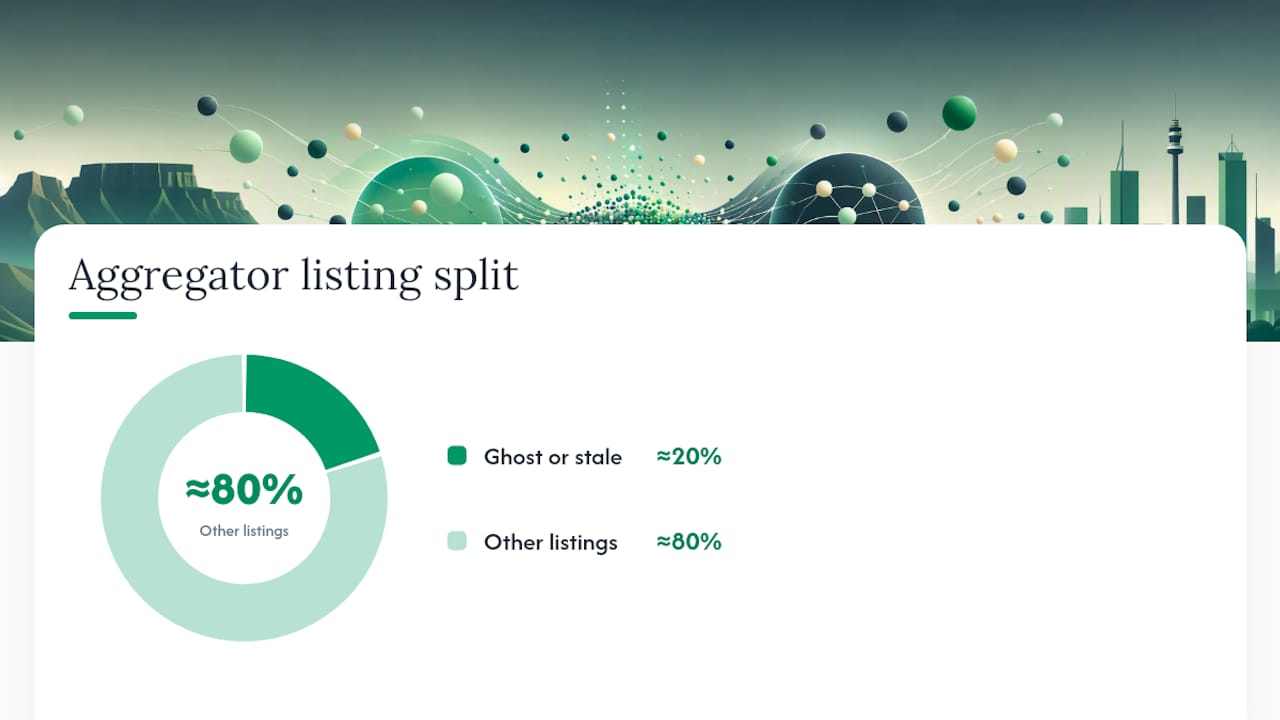
A ghost listing is a job that’s posted but never intended to be filled, sometimes kept open to build a talent pipeline, sometimes just forgotten. A stale listing is simply one nobody remembered to remove. Both waste your time, and both are common enough that nearly one in five aggregator listings may fall into this category.
Watch for these red flags:
- A posting with no company name, vague duties, and an application email instead of a proper form
- The exact same listing text appearing under three or four different company names
- A “posted” date that’s weeks old with no update, especially for a role that should move fast
- No matching listing on the company’s own careers page or LinkedIn company page
Before applying to anything that raises a flag, cross-check the company’s official careers page and LinkedIn. If a role isn’t listed there but is “urgent” on an aggregator, treat that as a warning sign. Report suspicious listings through the platform’s flag or report function, and never hand over ID numbers, banking details, or upfront payments as part of an application. No legitimate employer asks for money to process a job application.
When to use an aggregator vs a job board
Match the platform to what stage of the search you’re actually in.
- Just starting out or exploring options? Use an aggregator first to see the full range of roles, titles, and salary bands in your field.
- Found three or four roles that genuinely fit? Move to the board or company site to apply directly, where you’ll get verification and a cleaner application path.
- Searching for a niche or specialised role (engineering, healthcare, skilled trades)? Go straight to a niche board or a category-specific search, like IT roles or teaching positions, since general aggregators dilute specialist searches with irrelevant results.
- Need a job urgently? Split your time evenly, aggregators for volume, boards for the fastest verified applications, and check both daily rather than weekly.
| Scenario | Best first stop | Why |
|---|---|---|
| Entry-level, open to many roles | Aggregator | Widest view of available titles and pay ranges |
| Specialised or senior role | Niche job board | Better verification, less duplicate noise |
| Urgent hire needed | Both, checked daily | Speed matters more than platform preference |
| Remote-only search | Aggregator with remote filter | Aggregators tend to index remote listings from more sources |
The short version: aggregators are for scouting, boards are for applying. A hybrid approach, mapping the market broadly before narrowing down, consistently outperforms sticking to one platform type.
Why this matters and how FindJobsZA maps to the guide
The decision checklist above assumes you have time to bounce between platforms, filter through duplicates, and verify listings one by one. Not everyone does. FindJobsZA was built around removing exactly that friction: browse by city or job type with no CV upload and no sign-up required, and get daily WhatsApp updates with new listings each morning instead of hunting through alerts and filters yourself.
That structure fits several scenarios from the checklist directly. For the urgent-hire scenario, a daily WhatsApp push means you see fresh listings the same morning they go live, without logging into multiple aggregators. For entry-level or general searches, browsing by city or category gives you the aggregator-style breadth without the sign-up wall most boards put up front. FindJobsZA also publishes practical guidance on how programmatic job advertising works in South Africa, which helps explain why some listings you see are sponsored placements rather than organic ones.
A practical takeaway on where to spend your time
Split your search roughly 30/70: a third of your time scanning aggregators for breadth, the rest applying through boards or company sites where verification is stronger. Track every application in a simple log, source, date, outcome, because the pattern usually shows up within two or three weeks, not two or three days. Most people quit tracking right before it would have told them something useful. Pick one aggregator and one or two boards relevant to your field, commit to that combination for a month, and adjust based on what actually produces interviews rather than what feels productive.
— Nkosi
Ready to skip the filtering and just see the jobs?
If everything above sounds like more admin than you wanted, that’s fair. Aggregators demand filtering skills, boards demand profile-building, and both eat time before you see a single relevant listing. FindJobsZA cuts that step out entirely: no CV upload, no account, no profile to build, just browse open roles by city or job type and apply directly to what fits.
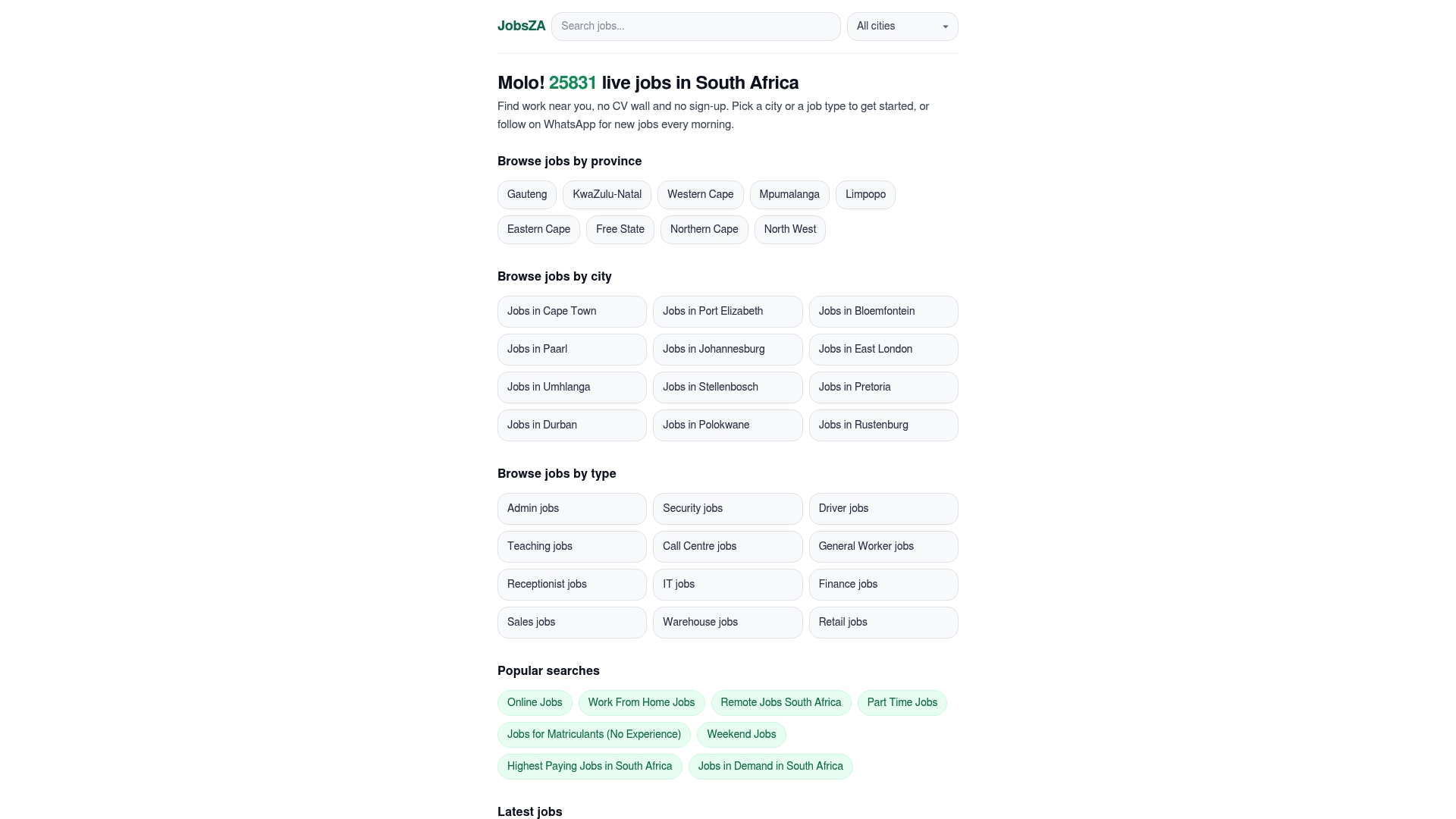
For anyone juggling a job search around existing work or study, the daily WhatsApp alerts do the “checking daily” step from the decision checklist for you automatically. Looking for something flexible instead of full-time? Browse part-time roles or check what’s currently listed under jobs in demand across South Africa right now. Start browsing today and see what’s open in your city this morning.
Sources
- Best Job Boards 2026: Which One Is Right for You? | ResuFit
- Job Boards vs Job Search Engines: How They Work and Which Is Best for You?
- Job Board Aggregator: How It Works & How to Build One
FAQ
What is the best job platform to start with in South Africa?
There’s no single “best” platform. Start broad with an aggregator or a local-first tool like FindJobsZA to see what’s available by city or role, then move to niche boards for specialised applications.
Is PNET a job board?
Yes, PNET operates as a traditional job board, where employers post listings directly and manage applications through the platform rather than having postings scraped from other sources.
What is another name for a job board?
Job boards are sometimes called “career sites,” “recruitment platforms,” or “vacancy listing sites,” though “job board” remains the most widely used term.
What does a job aggregator actually do?
A job aggregator crawls or pulls job listings from company sites, boards, and agencies, then displays them in one searchable index, usually linking back to the original source rather than hosting the application itself.
Are aggregators or job boards better for entry-level roles?
Aggregators tend to work better first for entry-level searches since they show the widest range of available titles and pay bands, but always verify a listing on the company’s own careers page before applying.
Recommended
Start with your city.
27 342 live jobs, filtered by city and suburb. No sign-up wall, no CV upload just to look.