Job Title Tips That Work for Recruiters and Candidates in South Africa
14 September 202617 min read

Contents16 sections
- 1Table of Contents
- 2Quick checklist: priority job title tips you can use right now
- 3Why job titles matter: succinct evidence and what studies show
- 4Step-by-step: how to craft a job title for hiring teams
- 5Examples: job titles by level and department
- 6How to present job titles on a resume and LinkedIn
- 7Common mistakes and red flags when naming jobs
- 8Publisher perspective: what FindJobsZA sees in listing performance
- 9The impact of job titles on career progression and employee motivation
- 10How to handle nonstandard or internal titles on resumes
- 11How to research and benchmark job titles within your industry or company size
- 12Editorial take: what most job title advice gets backward
- 13Post a clearer title, get better matches: how FindJobsZA helps
- 14Sources
- 15FAQ
- 16Recommended
Job Title Tips That Work for Recruiters and Candidates in South Africa
Use a standard, searchable term, put function and seniority in the same line, keep it under six words, and never inflate the role beyond what the job actually pays or does. That formula helps employers attract the right applicants and helps job seekers get found by recruiters and applicant tracking systems. It applies everywhere a title appears: job ads, resume headers, and LinkedIn profiles.
TL;DR:
- Using clear, standard, searchable job titles that include function, specialty, and seniority improves visibility and applicant quality across platforms.
- Testing different title variations regularly helps identify wording that attracts more relevant candidates, as small changes significantly impact application volume.
- Titles should be under six words, free of bias or internal jargon, and accurately reflect the role’s duties and pay level to avoid mismatched applicants.
- Internal titles or unconventional names should be translated into market-standard terms on resumes and job postings to maximize searchability and clarity.
- Consistently benchmarking titles against real-world listings of similar roles within your industry ensures they remain relevant and effective in attracting suitable candidates.
Table of Contents
- Quick checklist: priority job title tips you can use right now
- Why job titles matter: succinct evidence and what studies show
- Step-by-step: how to craft a job title for hiring teams
- Examples: job titles by level and department
- How to present job titles on a resume and LinkedIn
- Common mistakes and red flags when naming jobs
- Publisher perspective: what FindJobsZA sees in listing performance
- The impact of job titles on career progression and employee motivation
- How to handle nonstandard or internal titles on resumes
- How to research and benchmark job titles within your industry or company size
- Editorial take: what most job title advice gets backward
- Post a clearer title, get better matches: how FindJobsZA helps
- Sources
- FAQ
Quick checklist: priority job title tips you can use right now
Most bad job titles fail for one of two reasons: nobody searches for the term, or the term hides what the role actually involves. Fix those two problems first, and everything else is polish.
- Use the term candidates actually type into search bars. “Growth Marketing Manager” gets found; “Ninja of Customer Delight” does not.
- Put seniority in the title when it changes the job. “Senior” and “Junior” filter out mismatched applicants before they even open the ad.
- Add a specialty word if the function is broad. “Software Engineer, Backend” tells candidates more than “Software Engineer” alone.
- Cut anything under six words if you can. Long titles get truncated on job boards and LinkedIn search results.
- Avoid internal-only jargon. “Team Lead, Tier 2 Support” makes sense inside your company; outside, it reads as a mismatch.
- Check for bias language. Words that skew gendered or age-coded (“young”, “rockstar”, “ninja”) quietly shrink your applicant pool.
- Match the title to the pay band. A title that promises “Director” for a $45,000 salary breeds distrust fast.
- Test more than one wording before locking it in. Recruitment guidance consistently recommends standard, searchable terms over internal jargon, and testing is how you find out which standard term wins.
For employers auditing an existing listing, run this shorter version: confirm the title matches the actual duties, confirm it matches the pay grade, confirm it contains a searchable keyword, and confirm nobody on the hiring panel would wince reading it aloud to a candidate.
Pro Tip: Before you publish, paste your working title into a job search bar exactly as a candidate would. If nothing relevant comes up, or if a completely different role dominates the results, rewrite it. Five minutes of searching saves weeks of low-quality applications.
Why job titles matter: succinct evidence and what studies show
Job titles are not decoration. They are a filtering mechanism that shapes who clicks, who applies, and who gets matched to the right role in the first place.
A field experiment covering 50,000 listings and 800,000 users on an online labor platform found that the breadth of information packed into a job title measurably changed how often listings got viewed and how well candidates matched to them.
That is not a small sample. It means title wording is doing real work in the background of every job board, whether employers realize it or not. A separate academic analysis of job-title language found that the words in a title explain most of the variance in applicant education and experience across job vacancies, more so than formal occupation classification codes. In plain terms: the title itself, not some backend category, is what tells the market who this job is for.
Indeed’s own engineering team ran controlled tests on this exact question. There A/B testing on title wording found that small changes, like swapping one qualifier for another, produced measurable shifts in applicant volume, and in some markets, in applicant qualification rates too.
Three things follow from this evidence:
- Titles function as a search query match, not just a label, so ATS and job-board algorithms weight the wording heavily.
- The same role can attract wildly different applicant pools depending on how the title is phrased.
- Testing title variations is not a vanity exercise. It is one of the few controllable variables that produces a measurable applicant response.
Step-by-step: how to craft a job title for hiring teams
Building a good title is a workflow, not a guess. Here is the sequence that consistently produces titles that both humans and algorithms understand.
- Define the target candidate and the core function first. Before you write a single word, decide who you are trying to reach and what they do day to day. A title written before this step is a title written blind.
- Pull 10 to 20 real-world examples. Search competitor postings, career pages, and LinkedIn for the role you are hiring, and note which phrasing keeps repeating. Ongig’s job title guide is a useful reference point for department-level conventions if you want a broader baseline.
- Assemble the title in this order: function, then specialty, then seniority. “Marketing Manager, Content” reads cleaner than “Content Marketing Manager Senior” because the structure follows how people actually search.
- Screen for bias, length, and platform limits. Strip gendered or age-coded language, trim past six words where you can, and check that your applicant tracking system or job board does not truncate anything important.
- Run a short test where the platform allows it. Post two versions for a week, or rotate wording across two similar postings, and compare applicant volume and quality. Indeed’s own experiments used exactly this method to validate title changes before rolling them out broadly.
- Audit existing titles on a schedule, not just at hiring time. Titles that made sense two years ago often drift out of step with market language.
Use this checklist when reviewing a live posting that is not performing:
- Does the title contain a keyword a candidate would actually search?
- Does it match the seniority level implied by the pay band?
- Is it under six or seven words?
- Would someone outside the company understand it without explanation?
- Does it avoid buzzwords like “guru”, “ninja”, or “rockstar” that research-backed HR guidance flags as inclusion risks?
Pro Tip: When two titles seem equally good, pick the one a recruiter would type into a LinkedIn search bar while looking for a candidate exactly like the one you want. That mental test filters out internal jargon faster than any checklist.
The practical workflow many recruiters use informally follows this pattern: gather competing titles, normalize the phrasing, isolate the two or three patterns that repeat most often, choose the one that balances accuracy against search volume, then test it live for a week or two before rolling it out across similar roles. It is unglamorous work, but it is the difference between a title that sits unnoticed and one that pulls in the right applicants within days.
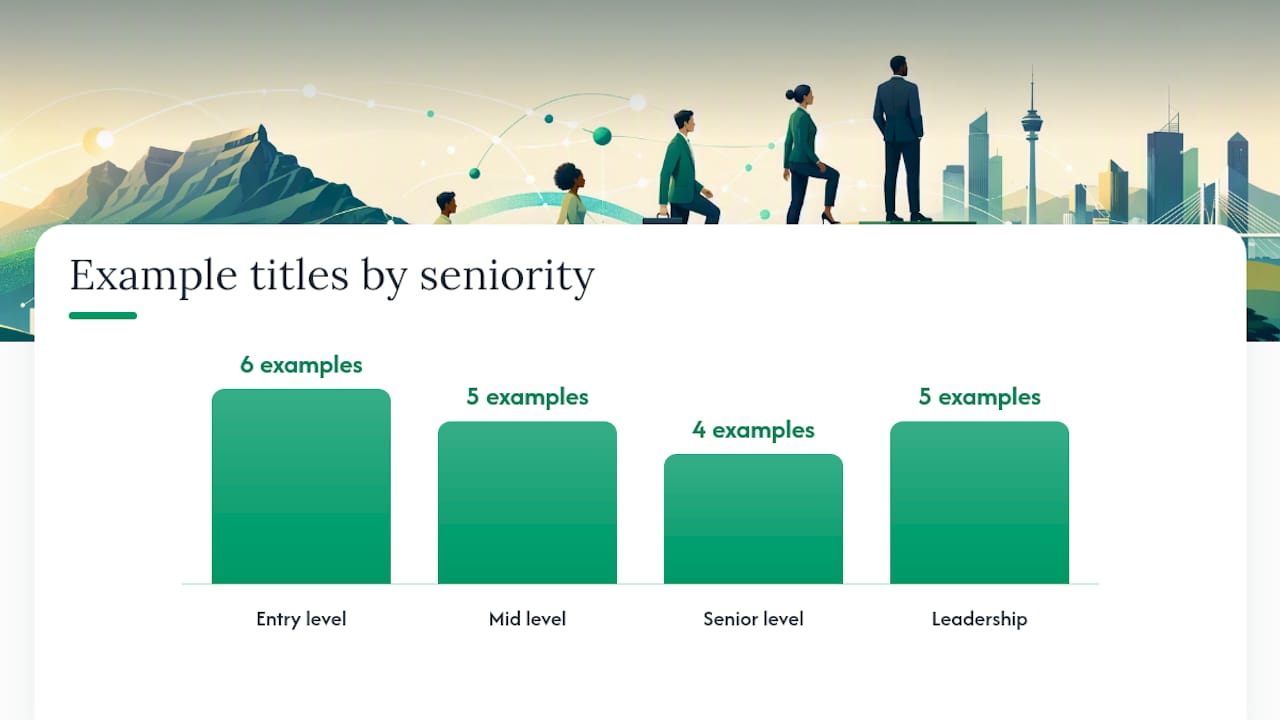
Examples: job titles by level and department
Concrete examples save more time than any abstract rule. Below are copyable starting points across the departments hiring teams and job seekers ask about most often.
Entry level:
- Junior Software Developer
- Marketing Coordinator
- Sales Associate
- HR Administrator
- Operations Assistant
Mid level:
- Software Engineer, Backend
- Marketing Manager, Content
- Account Executive, B2B Sales
- HR Generalist
- Operations Analyst
Senior level:
- Senior Software Engineer, Front End
- Senior Marketing Manager, Growth
- Senior Account Executive
- Senior HR Business Partner
- Senior Operations Manager
Leadership:
- Engineering Manager
- Director of Marketing
- VP of Sales
- Head of People
- Director of Operations
A few functional modifiers do a lot of work in a short space. “Front end” and “back end” instantly narrow a software role for both candidates and recruiters. “B2B” or “B2C” clarifies a sales title in one word. “Growth” versus “Brand” splits marketing management into two very different jobs that would otherwise share an identical title.
On acronyms: widely recognized ones like HR, IT, and VP are safe to use unspelled in most postings and resumes. Less universal ones, like specific internal grading systems (“L4 Engineer”) or company-specific shorthand, should be spelled out or dropped entirely, since outside your organization they read as noise rather than signal.
How to present job titles on a resume and LinkedIn
Your resume headline should carry one clear title, the one closest to the role you are applying for or the standard market term for what you actually did. Save nuance for the summary line underneath it, where you have room to say “also known internally as X” without cluttering the headline itself.
- Lead with a target title that matches the market standard, not necessarily your exact internal title, if the internal one is nonstandard or confusing.
- Keep the official title available for background checks and reference calls, even if you adjust the header wording slightly for clarity.
- Place your strongest keyword, the one recruiters and ATS systems search for, as close to the start of the title line as possible.
- If you held multiple roles at one company, list each with its own dates rather than merging them into a single vague title.
- For contract or short-term gigs, label them clearly (“Contract”, “Freelance”, “6-month contract”) so a hiring manager does not read them as a gap or a misrepresentation.
Formatting matters as much as wording for how modern ATS systems parse and score a CV, since some systems weight keyword placement heavily and others rely more on structural parsing. Either way, a clean, front-loaded title line beats a clever one. If you want a deeper walkthrough of formatting specifically for South African ATS systems, this guide on beating ATS filters covers the mechanics in more detail.
Pro Tip: If your official title is unusual, keep it in parentheses right after your target title: “Growth Marketing Manager (Digital Engagement Specialist II).” You get searchability and honesty in the same line.
Common mistakes and red flags when naming jobs
The failure modes here repeat constantly, and most of them are avoidable with one extra pass before publishing.
- Title inflation. Calling a role “Director” when the pay and scope match a coordinator role erodes trust fast and creates awkward conversations later.
- Overly creative titles. “Happiness Engineer” might work for a specific brand culture, but it tanks discoverability everywhere else, and confuses applicants about what the job actually is.
- Biased or coded language. Terms that skew young, male, or culturally narrow quietly shrink the applicant pool without anyone intending it.
- Keyword stuffing. Cramming five qualifiers into one title (“Senior Lead Backend Full Stack Software Engineer II”) reads as spam to both humans and some platform algorithms, and can suppress visibility rather than boost it.
- Ignoring platform truncation. A title that reads perfectly in your ATS might get cut off mid-word on a mobile job board listing.
Publisher perspective: what FindJobsZA sees in listing performance
The platform was built around a simple idea: job seekers should not have to dig through vague postings, create accounts, or upload a CV just to see what is available near them. That design choice puts pressure on the listings themselves to be clear, because there is no long application funnel to compensate for a confusing title.
Filters by city, by job type, and by daily WhatsApp alerts work best when the underlying title is specific and standard. A listing titled “General Worker Needed” filters poorly compared to “Warehouse Picker, Day Shift”, because the second version matches how people actually search and how alerts get categorized. Employers who tighten their titles before posting tend to see cleaner matches come through the alert system, because the listing is doing the filtering work upfront instead of leaving it to the applicant to guess.
The impact of job titles on career progression and employee motivation
Titles are not just recruiting tools. Inside a company, they shape how people see their own trajectory and how seriously colleagues and outside recruiters take their experience.
An employee stuck with a flat, generic title for years, even while their responsibilities grow, often struggles to translate that growth into their next job search, because the title on record does not reflect the added scope. That mismatch is one reason internal promotions sometimes come with title changes even when the pay increase is modest. The title itself functions as recognition, and its absence can read as stagnation even when the work has clearly evolved.
The same logic cuts the other way for motivation. A title bump, even a small one like moving from “Associate” to “Senior Associate”, carries signaling value both internally and to the outside market. It is one of the cheapest levers a company has to mark progress, which is exactly why title inflation is tempting and exactly why it backfires: once titles stop reliably signaling scope or seniority, they lose their motivational value for everyone, not just the person who received the inflated one.
How to handle nonstandard or internal titles on resumes
Internal titles that make perfect sense inside a company culture often mean nothing to an outside recruiter or an applicant tracking system scanning for keywords.
The fix is not to hide the internal title, it is to translate it. If your official role was “Customer Happiness Champion” but your actual work was frontline customer support and escalation handling, lead your resume with “Customer Support Specialist” and note the internal title afterward if it adds context. This keeps you honest while making sure the keyword an ATS or recruiter is scanning for actually appears on the page.

The same approach applies to titles that are technically accurate but too narrow or too broad to be useful. A title like “Team Member” tells a recruiter almost nothing about seniority or function, so pairing it with a one-line clarifier in your resume summary, such as “led a five-person retail team”, recovers the missing signal without inventing a title you never held. The goal throughout is alignment between the title a reader sees and the title a search engine or ATS is scanning for, without ever claiming a role or scope you did not actually have.
How to research and benchmark job titles within your industry or company size
Benchmarking a title against your actual market takes less effort than most people expect, and it beats guessing every time.
Start by pulling 10 to 20 live postings for the role you are hiring or applying for, focusing on companies of a similar size and industry rather than the biggest names in the space, since a 20-person startup and a 5,000-person enterprise often use very different title conventions for the same function. Note which words repeat across those postings. That repetition is your market signal, and it usually points to two or three dominant phrasings rather than one universal answer.
From there, cross-check against a broader reference like Ongig’s job title guide to see how your chosen phrasing fits within standard department-level hierarchies. If you are an employer setting a title for a brand-new role with no obvious precedent, err toward the more common phrasing over the more precise one. A slightly less exact title that matches how candidates search will outperform a perfectly accurate title that nobody types into a search bar.
Editorial take: what most job title advice gets backward
Most advice on this topic treats job titles as a branding exercise, something to make a role sound impressive. The evidence points the other way. Titles work best as search terms first and status symbols second, and treating them as a decoration project is exactly how you end up with a title that sounds good in a meeting and disappears in search results.
The gap I see most often is between employers who obsess over getting the “perfect” creative title and employers who never test their titles at all. Both miss the same point: a title is a hypothesis about how candidates search, and hypotheses need testing, not intuition. Job seekers make the mirror-image mistake, clinging to an exact internal title out of a sense of accuracy when a market-standard variation would get them found faster without misrepresenting anything.
If you take one thing from this article, take the testing habit, not the checklist. Checklists tell you what a good title looks like. Testing tells you what actually works for your specific role, your specific market, and your specific applicant pool.
— Nkosi
Post a clearer title, get better matches: how FindJobsZA helps
This platform is a practical shortcut for putting these title tips into action without the usual friction of job boards, no CV uploads, no account creation, just direct browsing by city, province, or job type, with new listings delivered straight to WhatsApp every morning. That structure rewards clear, standard titles on both sides: employers whose postings use searchable, well-structured titles get seen by more relevant candidates, and job seekers who search using the target titles covered above get matched faster.
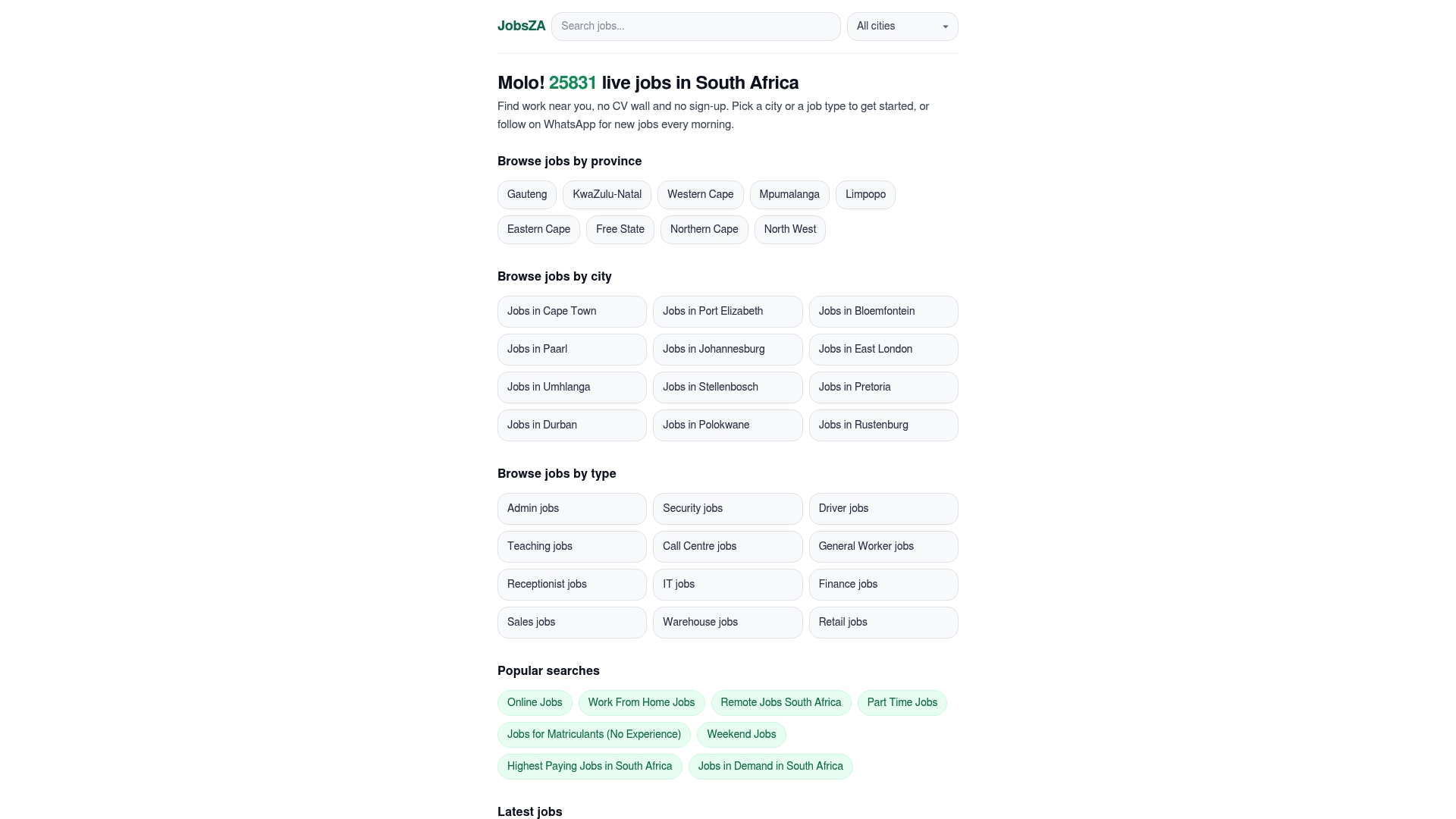
If you are hiring, post your role with a title built the way this guide outlines, function, specialty, seniority, and check it against live IT vacancies, sales roles, or HR positions to see how similar roles are phrased in your sector. If you are job hunting, set your WhatsApp alerts using the standard market title for the role you want, then browse remote jobs or part-time listings to test how well that title wording surfaces the roles you are actually after. Either way, the next step is the same: go post or search with a title that matches how people actually look for work.
Sources
The claims in this article draw on controlled experiments and recruitment-industry guidance rather than opinion alone. For deeper reading:
- Field experiment on job titles and online labour markets
- Does your job title matter? - Indeed Engineering
- How job titles affect job search and matching (academic study)
- Best practices: job titles and descriptions - Recruitics
FAQ
What should I put as a job title?
Use the standard market term for your role, structured as function plus specialty plus seniority when relevant, such as “Marketing Manager, Content” or “Senior Software Engineer, Backend.”
Can you give me 10 examples of job titles?
Junior Software Developer, Marketing Coordinator, Sales Associate, HR Administrator, Software Engineer (Backend), Senior Account Executive, Marketing Manager (Growth), Engineering Manager, Director of Operations, and VP of Sales cover most levels and departments.
What job title should I give myself?
Choose the market-standard title closest to your actual responsibilities and pay level, not your most impressive-sounding internal title, since search visibility and honesty both depend on that alignment.
What is a job title example?
“Senior Marketing Manager, Growth” is a strong example because it shows seniority, function, and specialty in one short, searchable line, exactly the structure recruiters and applicant tracking systems respond to. If you are searching for work, testing that same structure directly on Findjobsza’s online jobs page shows how it performs against real listings.
Recommended
Start with your city.
21 623 live jobs, filtered by city and suburb. No sign-up wall, no CV upload just to look.