Skip CVs: Browse Jobs by Industry and Apply Faster in South Africa
5 September 20269 min read

Contents11 sections
- 1Table of Contents
- 2Which industries have the most job openings right now?
- 3How do you filter and search jobs by industry effectively?
- 4How can you apply smarter and spend less doing it?
- 5How does Findjobsza help you browse jobs by industry?
- 6Where can you verify employers and check hiring trends?
- 7What the data actually tells us about job hunting by sector
- 8Browse and apply faster with Findjobsza
- 9Sources
- 10FAQ
- 11Recommended
Skip CVs: Browse Jobs by Industry and Apply Faster in South Africa
Go straight to industry category pages on a job-listing platform, filter by sector, and set an alert before you do anything else. A job listing platform organizes live vacancies by industry so you can skip generic search results entirely. Job seekers spend an average of R1,469 a month just hunting for work, so cutting wasted searches matters more than most people realize. The sections below break down which industries are hiring, how to filter smartly, and how to avoid burning money on applications that go nowhere.
TL;DR:
- Target industries with high hiring activity like finance, retail, and healthcare to maximize your chances of landing a job quickly and cost-effectively.
- Narrow your search with exact phrases and specific location filters to reduce irrelevant results and improve interview opportunities.
- Focus on targeted applications rather than mass applying, as focused efforts yield better results and help save monthly search costs.
- Use industry-specific browsing and daily alerts to stay updated on live openings and avoid wasting time on outdated or filled listings.
- Verify employer legitimacy through official registration and beware of scams, especially in low-skill categories with high application volumes.
Table of Contents
- Which industries have the most job openings right now?
- How do you filter and search jobs by industry effectively?
- How can you apply smarter and spend less doing it?
- How does Findjobsza help you browse jobs by industry?
- Where can you verify employers and check hiring trends?
- What the data actually tells us about job hunting by sector
- Browse and apply faster with Findjobsza
- Sources
- FAQ
Which industries have the most job openings right now?
Some sectors post constantly. Others post in bursts tied to seasons or contracts. Knowing the difference saves you from checking the wrong category every day.
- Retail & trade: Cashiers, stock controllers, and store managers. Chains like SPAR hire in waves, especially around holidays.
- Healthcare: Nurses, caregivers, and clinic administrators are in near-constant demand, and the nursing jobs category reflects that with nearly a thousand active listings.
- Admin & office support: Data capturers, receptionists, and office assistants across nearly every sector that needs paperwork handled.
- IT & telecoms: Support technicians, developers, and call center agents, many now hybrid or remote.
- Manufacturing: Machine operators, quality controllers, and warehouse staff, concentrated around industrial parks.
- Hospitality & food service: Waitstaff, kitchen staff, and baristas, with heavy weekend and part-time demand.
- Transport & logistics: Drivers, dispatchers, and warehouse coordinators, tightly linked to retail and manufacturing cycles.
- Construction: Site laborers, foremen, and skilled trades, often project-based and regional.
- Finance & insurance: Bookkeepers, claims administrators, and auditors. This is one of the sectors SAGEA’s employer benchmark flags as a top recruiter, with audit functions carrying a particularly high vacancy share.
- Education: Teachers, tutors, and support staff, reflected in categories like teaching jobs.
- Sales & marketing: Sales reps, account managers, and marketing coordinators. The sales jobs category alone lists close to 4,000 vacancies, making it one of the busiest on the platform.
If you’re unsure which official category a company falls under, the SARS standard industrial classification codes map divisions like manufacturing (10 to 33) and wholesale and retail (45 to 47), which can help you cross-check an employer’s actual sector against the listing.
How do you filter and search jobs by industry effectively?
Broad searches waste time. Narrow ones surface roles you’ll actually get an interview for.
- Use exact phrases. Search “warehouse supervisor” in quotes rather than warehouse supervisor without them. Quotes force the engine to match the phrase, not scattered keywords.
- Apply Boolean logic. Try “retail” AND “cashier” NOT “manager” to exclude senior roles you’re not qualified for yet, or “nursing” OR “caregiver” to widen a healthcare search.
- Set the date filter to “last 24 hours” or “last 3 days.” Old listings often mean the role is filled or the ad was never taken down.
- Lock in location exactness. Search a suburb or industrial park name, not just a city. This cuts down on commute mismatches, a step that job-alert research links directly to higher interview show-up rates.
- Filter by employment type. Decide up front whether you want full-time, part-time, or remote, and stick to that filter so you’re not scrolling past irrelevant listings.
- Create separate named alerts per industry, like “Retail Cape Town” and “Admin Remote,” so you can compare which searches actually yield replies over a couple of weeks.
Pro Tip: Break a huge category like “retail” into smaller subnodes, such as “till operator” or “stock controller in [your suburb].” A giant industry label returns hundreds of results; a specific subnode returns the ten that actually fit your commute and skill level.
How can you apply smarter and spend less doing it?
Mass applying feels productive, but it rarely is. SAGEA’s employer data shows competition for most roles is intense enough that candidates who target a handful of well-matched openings tend to outperform those blasting out dozens of generic applications.
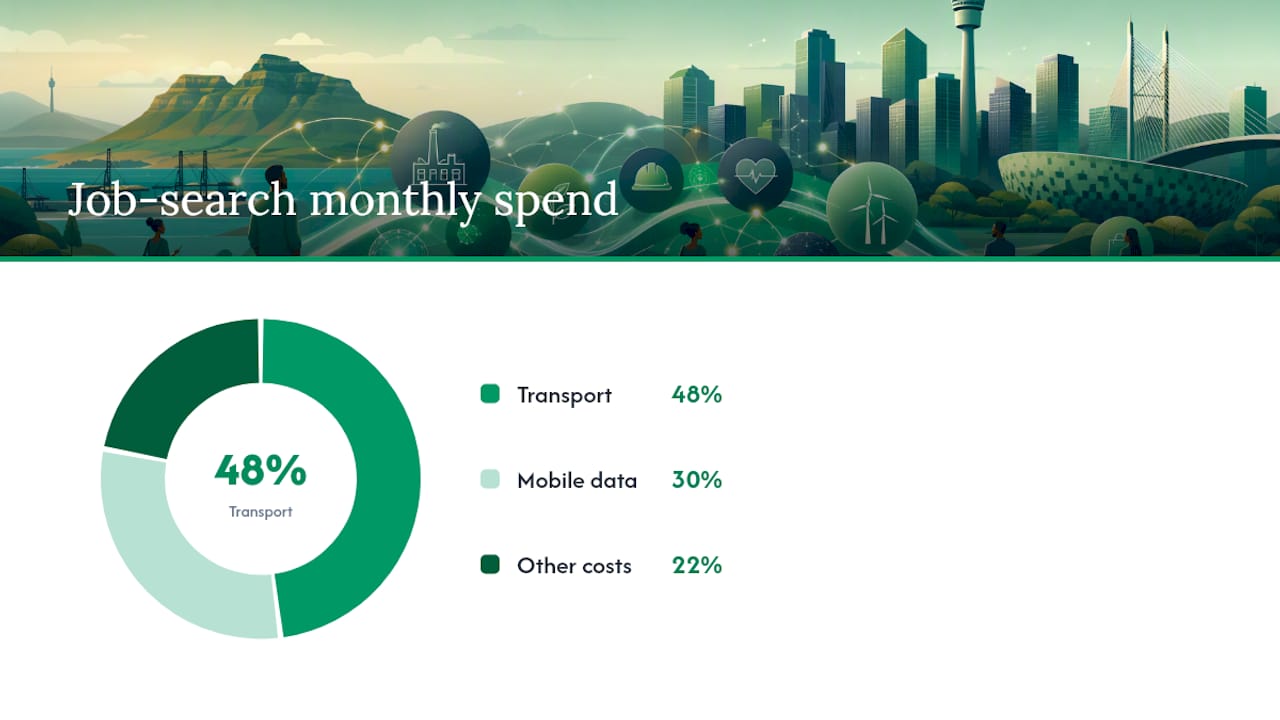
Young South Africans spend an average of R1,469 a month searching for work, split roughly between R700 on transport, R441 on data, and R328 on other application costs.
That number alone justifies tightening your process. A simple, repeatable checklist helps:
- Write a short, tailored message that names the role and one relevant skill, not a generic copy-paste line.
- Include one concrete line of proof, like “handled till reconciliation for 8 months” instead of “good with numbers.”
- Attach only what’s asked for. Extra documents slow down data-light applications and rarely help.
- Follow up once, about a week later, if you haven’t heard back.
Cost-saving habits matter just as much as the words you write. Batch your interviews on the same day when possible, lean on daily alerts instead of manually checking five sites, and use WhatsApp-based updates so you’re not burning data refreshing browser tabs.
Scams cluster around high-volume, low-skill categories like general labor, data entry, and bulk hospitality hires. Before applying, check the company’s registration on CIPC, look for a specific location rather than a vague city name, and be wary of any ad asking for an upfront fee. A listing that’s been live for months with no updates is also worth a second look.
How does Findjobsza help you browse jobs by industry?
The platform builds its entire structure around industry and location, not a single search bar you have to fight with. That matters most when CV-first hiring already screens out large numbers of first-time applicants who have real skills but no paper trail to prove it, a gap industry data on entry-level hiring confirms is widespread.
- No CV or sign-up required. You can browse and apply directly, which removes a major barrier for those without a polished resume.
- Category pages for major sectors, including part-time jobs, weekend jobs, remote roles, and sales positions.
- Daily alerts deliver new listings each morning, reducing the need to manually refresh multiple portals throughout the day.
- A simple application process designed for speed, useful when targeting several openings within one industry.
If retail or hospitality suits you, the SPAR jobs page is a solid entry point. If you’d rather work from home, start with online jobs instead.
Where can you verify employers and check hiring trends?
- SAGEA’s employer benchmark shows which sectors, like accounting and audit, are recruiting hardest right now.
- SARS SIC codes help you confirm an employer’s actual industry division before applying.
- IOL’s cost-of-searching report explains the real financial burden behind job hunting, useful when budgeting your own search.
- The job posting cost guide shows why some industries post more frequently than others.
What the data actually tells us about job hunting by sector
Most advice tells you to “apply everywhere” and “customize every CV.” Both pieces of advice miss the real bottleneck. The problem isn’t effort, it’s aim. SAGEA’s benchmark data makes it clear that targeted applications beat volume, yet most job seekers still treat the search like a numbers game rather than a matching problem.
The bigger issue conventional advice ignores is cost. Searching for work isn’t free, and R1,469 a month is a real constraint for someone who isn’t earning yet. That’s why I think alerts and category browsing deserve more attention than they get. They cut the number of dead-end searches, which cuts transport trips and data spend, not just time.
If you take one thing from this, prioritize the industries actually hiring at scale, like finance, retail, and healthcare, over chasing every listing that shows up in a generic search. Narrow first. Apply second. Follow up once.
— Nkosi
Browse and apply faster with Findjobsza
The platform skips parts of job hunting that waste time: no CV upload, no account creation, no scrolling through irrelevant results. You pick an industry, see live openings, and apply.
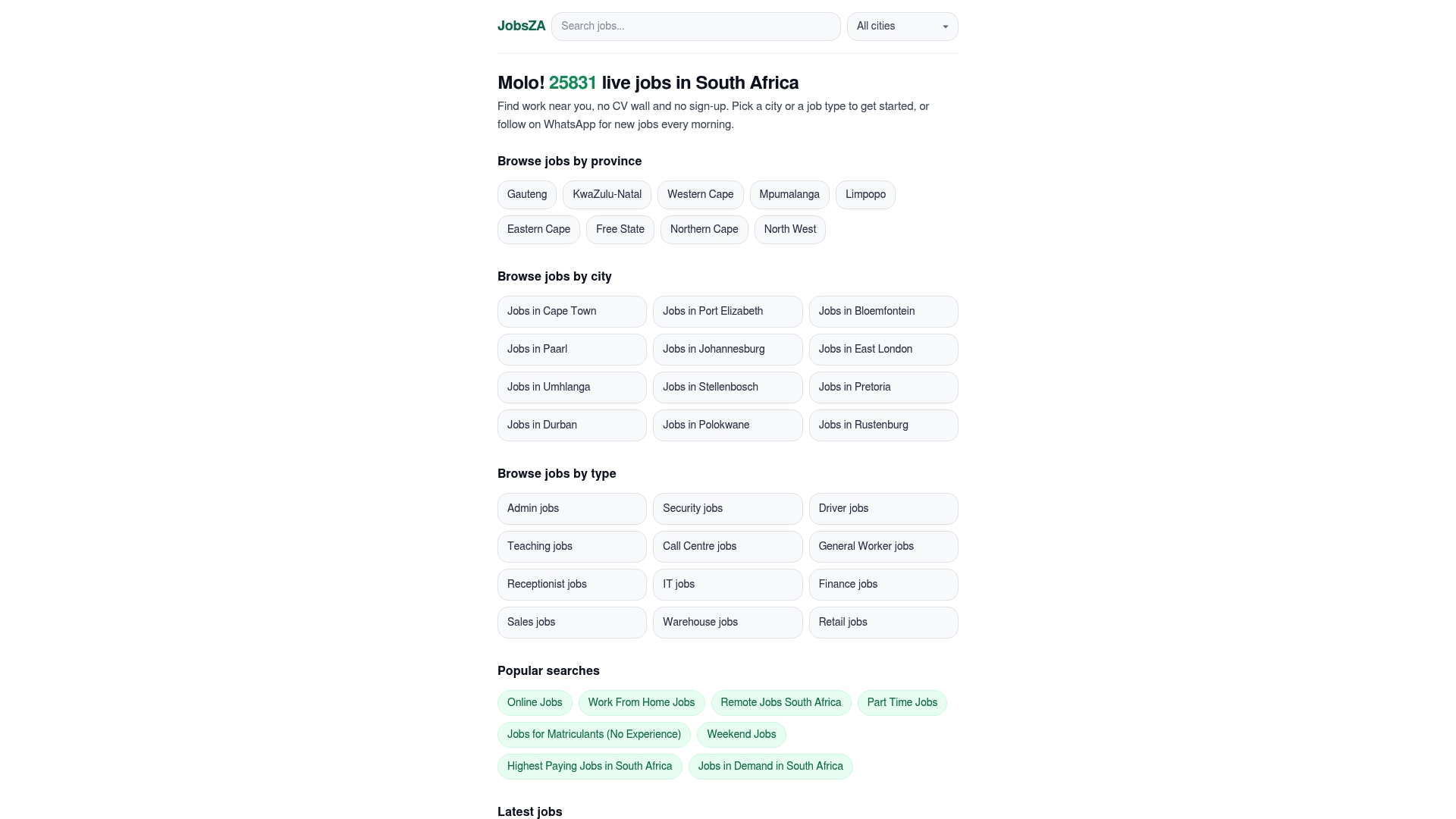
Whether you’re looking for retail hours, a remote admin role, or a nursing vacancy, the platform’s category pages put those openings in front of you without complicated filters. Daily alerts deliver fresh listings each morning instead of manually checking multiple sites. If you’re weighing sectors, the jobs in demand page is a fast way to see where hiring is strongest right now.
Start with the part-time jobs category if you need flexible hours, or head to remote jobs if commuting is your biggest cost. Either way, browse the listing that matches your industry today and apply directly.
Sources
- The shocking amount young South Africans spend just looking for work
- The SAGEA Employer Benchmark and Candidate Insights 2026
- Standard industrial classification codes (SARS)
- New data shows CVs are blocking South Africa’s entry-level workforce
FAQ
What is the fastest way to find jobs by industry?
Go directly to an industry category page on a job-listing platform, filter by location and employment type, then set an alert so new listings reach you automatically.
Which industries are hiring the most right now?
Finance and professional services, retail and trade, and healthcare currently show some of the strongest hiring activity, according to SAGEA’s benchmark data.
How much does job hunting typically cost?
Young job seekers spend an average of R1,469 a month on transport, data, and application-related expenses combined.
Do I need a CV to apply for jobs on Findjobsza?
No. Findjobsza lets you browse and apply directly without uploading a CV or creating an account, which helps first-time applicants who lack formal work history.
How do I avoid job scams when browsing by industry?
Check the employer’s registration through CIPC, confirm the listing has a specific location, and treat any request for an upfront fee as a red flag.
Recommended
Start with your city.
24 231 live jobs, filtered by city and suburb. No sign-up wall, no CV upload just to look.