Entry-level job alerts for new grads: daily SA setup
10 August 202613 min read

Contents12 sections
- 1Key takeaways
- 2Table of Contents
- 3What kinds of entry-level job alerts are there, and which works best?
- 4How do you judge whether a job alert service is reliable?
- 5How to set up effective entry-level job alerts in South Africa
- 6Why timely alerts matter so much for South African graduates
- 7What to do the moment a job alert lands
- 8A note on what actually works with job alerts
- 9Findjobsza gets you to the right roles faster
- 10Sources
- 11FAQ
- 12Recommended
Entry-level job alerts for new grads: daily SA setup
The fastest way to start receiving entry-level job alerts in South Africa is to subscribe to Findjobsza’s free daily WhatsApp alerts, which push new listings to your phone every morning with no CV upload or registration required. As a backup, register on Labour for verified, government-matched postings, and set a LinkedIn job alert filtered to South Africa with “0–2 years experience.”
Your three fastest options right now:
- WhatsApp alerts via Findjobsza: Daily morning delivery, no sign-up friction, national coverage across all major sectors.
- Email alerts via LinkedIn: Set experience level to “Entry level,” location to South Africa, and receive notifications within hours of a new post.
- ESSA (labour.gov.za): Free government job-matching; slower but verified and scam-free.
Go to Findjobsza now, browse by city or job type, and add yourself to the WhatsApp alert list in under two minutes.
Key takeaways
Setting up two or three targeted entry-level job alerts in South Africa, combined with a ready-to-send one-page CV, is the single most effective way to shorten your time to first interview.
| Point | Details |
|---|---|
| Start with WhatsApp alerts | Findjobsza’s free daily WhatsApp alert delivers new listings every morning with no sign-up required. |
| Register on ESSA | Labour.gov.za’s free job-matching system provides verified listings and direct Labour Centre referrals. |
| Use learnership keywords | Searching “learnership,” “graduate trainee,” and “0–2 years” in alerts surfaces less competitive openings. |
| Act within the hour | Entry-level roles in retail and BPO can close the same day; speed is a real competitive advantage. |
| Findjobsza for SA coverage | Browse by city or job type at findjobsza.co.za for national entry-level listings across all major sectors. |
Table of Contents
- What kinds of entry-level job alerts are there, and which works best?
- How do you judge whether a job alert service is reliable?
- How to set up effective entry-level job alerts in South Africa
- Why timely alerts matter so much for South African graduates
- What to do the moment a job alert lands
- A note on what actually works with job alerts
- Findjobsza gets you to the right roles faster
- Sources
- FAQ
What kinds of entry-level job alerts are there, and which works best?
Not all alert types are equal when you are competing for roles that fill in 24–48 hours.
- WhatsApp/SMS alerts: Fastest delivery. You see the listing before most people open their laptops. Findjobsza’s WhatsApp channel is built around this speed advantage.
- Email alerts: Reliable and filterable, but inbox delays and spam folders cost you hours. Best for roles with longer application windows (graduate programmes, learnerships).
- Site push notifications: Instant if you keep the browser tab open or allow push from a job board. Useful for high-volume sectors like BPO and retail.
- Company career-page monitoring: Set a Google Alert for “site:careers.company.co.za new vacancy” or use a free RSS reader on a company’s careers feed. Slow to set up, but you get the listing before any aggregator picks it up.
- LinkedIn job alerts: Strong for graduate-programme and corporate entry-level roles. Weaker for retail, hospitality, and informal-sector openings.
- Aggregator alerts: Broad coverage, but often include stale reposts and roles that have already closed.
Pro Tip: For retail, BPO, and seasonal intakes, WhatsApp or a direct company career-page monitor beats email every time. These roles can close the same day they are posted. If you are targeting a specific employer, set a Google Alert for their careers page and check it daily.
How do you judge whether a job alert service is reliable?
Speed means nothing if the listings are fake or three weeks old. Before you subscribe to any alert service, run through this checklist:
- Source transparency: Does the alert tell you where the job came from? Employer-posted listings (company career pages, ESSA) carry more weight than aggregated reposts with no named employer.
- Verified employer flags: Look for services that confirm the employer’s identity. ESSA listings are government-verified. Findjobsza posts directly from employer and recruiter submissions.
- Timeliness: Check the posting date on any listing you receive. If alerts regularly contain roles posted more than a week ago, the feed is stale.
- Filter options: Can you filter by experience level (0–2 years, matric required), keyword, city, or sector? Without filters, you drown in irrelevant posts.
- Geographic coverage: National coverage matters if you are open to relocating; city-level filtering matters if you are not.
- Cost: Most reliable SA alert services are free for job seekers. Paid tiers rarely add enough for entry-level candidates to justify the cost.
- Privacy and opt-out: Any legitimate service lets you unsubscribe in one click. If you cannot find an opt-out option, treat it as a red flag.
Scam signals to watch for: A listing that asks for payment before an interview, requests your banking details upfront, or has no named employer and no physical address is almost certainly fraudulent. Repeated reposts of the same role with slightly different wording are another tell.
Free alert services cover the vast majority of entry-level openings in South Africa. Paid subscriptions are generally aimed at mid-career professionals and offer little extra value for a first-job seeker.
How to set up effective entry-level job alerts in South Africa
Findjobsza WhatsApp and site alerts
- Go to Findjobsza.
- Browse by city or job category to confirm the platform lists roles in your area and field.
- Follow the WhatsApp alert link on the site and save the number to your contacts. Alerts arrive every morning, covering full-time, part-time, freelance, and no experience jobs across South Africa.
- No CV upload, no account creation. You are live from the moment you save the number.
ESSA registration on labour.gov.za
- Visit labour.gov.za and navigate to Online Services, then ESSA.
- Complete your profile: contact details, highest qualification, skills, and preferred location.
- ESSA matches your profile against employer vacancies and can refer you directly to a Labour Centre for placement support. Government portals like ESSA are underused but carry verified listings that aggregators miss.
LinkedIn job alerts
- Search “entry level” + your target role + “South Africa” in the Jobs tab.
- Set experience level to “Entry level” and location to South Africa or a specific city.
- Click “Set alert” and choose daily or weekly frequency. Daily is better for competitive roles.
- Optimise your LinkedIn profile so recruiters find you too. A well-structured profile increases inbound contact from employers posting the exact roles you are alerting on. The LinkedIn profile tips from EchoZA guide covers the key profile sections recruiters actually check.
Company career-page monitoring
- Identify five to ten target employers in your sector.
- Create a Google Alert:
site:[employer careers URL] vacancy OR internship OR learnership. - Alternatively, add the careers page RSS feed to a free reader like Feedly. You will see new posts before any aggregator indexes them.
Managing multiple alerts without drowning
- Create a dedicated email folder labelled “Job Alerts” and filter all alert emails into it automatically.
- Label your WhatsApp alert chats so they sit together and are easy to scan each morning.
- Log every application in a simple spreadsheet: role, employer, date applied, follow-up date.
Pro Tip: The keywords that catch real entry-level posts in South Africa are “0–2 years,” “matric,” “learnership,” “internship,” “graduate trainee,” and “no experience required.” Add at least three of these to every alert you set up. Roles tagged “junior” without an experience requirement often appear under these terms rather than “entry level.”
Why timely alerts matter so much for South African graduates
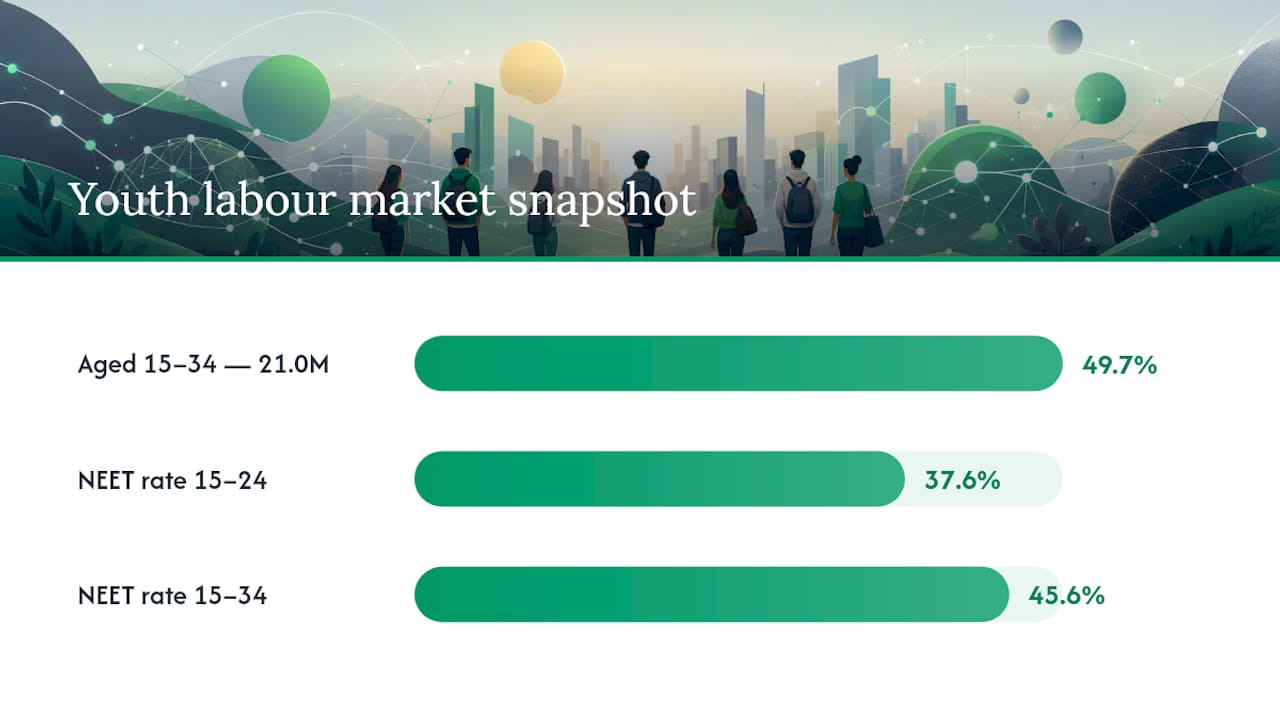
South Africa’s youth labour market is one of the most competitive in the world. Stats SA’s Q1 2026 QLFS data shows that 21.0 million people aged 15–34 make up 49.7% of the working-age population, with a NEET rate of 37.6% among those aged 15–24 and 45.6% among those aged 15–34. Those numbers mean that for every entry-level opening, there are many qualified candidates ready to apply the moment it goes live.
IOL’s reporting on South Africa’s labour market frames this as a demographic paradox: a large and growing pool of potential workers, but insufficient job creation to absorb them. That gap makes speed a genuine competitive edge. Getting an alert two hours before a peer means your application lands while the hiring manager is still reading the first batch.
Structured pathways close that gap more reliably than open adverts alone:
- Learnerships through SETA-registered providers combine a stipend with a qualification, and many lead directly to permanent employment.
- Internships and graduate programmes at larger corporates often run annual intakes. Alerting on these well before the intake opens gives you time to prepare a strong application.
- YES (Youth Employment Service) and other public employment programmes create structured entry points that ordinary job adverts do not.
- MySETA connects first-time job seekers to learnerships and workplace-based learning across multiple sectors.
What to do the moment a job alert lands
Speed matters, but a sloppy application wastes the advantage. Here is the sequence that works:
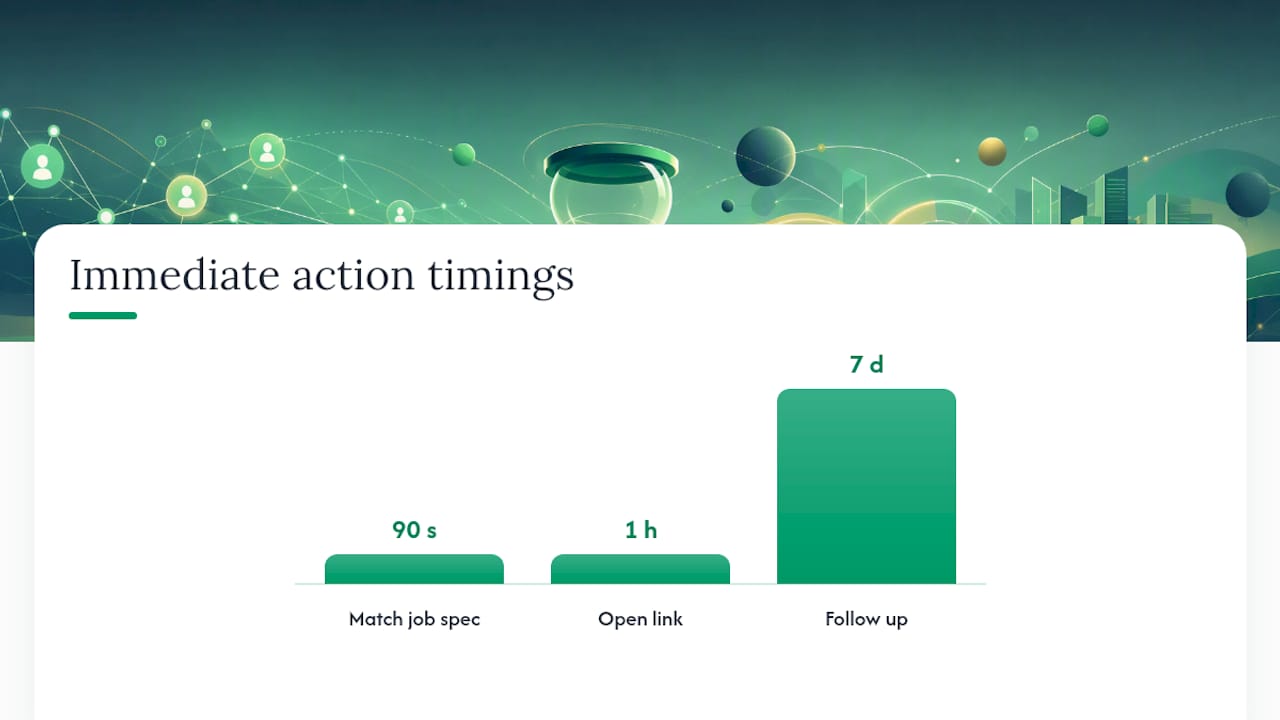
- Open the link within the hour. Roles in retail, BPO, and hospitality can close the same day.
- Match the job spec in 90 seconds. Does it list your qualification level? Does it say “matric” or “degree”? If you meet 70% of the requirements, apply.
- Tailor your two-line cover note. State the role name, your highest qualification, and one specific reason you fit. Example structure: “I am applying for [Role] at [Company]. I hold a [Qualification] and have [specific relevant skill or experience]. I am available immediately.” Keep it to three sentences maximum.
- Use a one-page quick CV. Keep a version of your CV that is already formatted and saved as a PDF. ResumeMint can convert your LinkedIn profile into a clean one-page resume in minutes if you need a fast refresh.
- Submit and log it. Record the employer, role, date, and a follow-up date (typically seven days later) in your spreadsheet.
- Follow up once. A short, polite email or LinkedIn message after seven days is appropriate. More than once looks desperate.
Graduates Hub’s framework for first-job seekers in South Africa suggests that a well-prepared graduate with tailored applications can generally expect to land a first role within a few months. The key word is “tailored.” Generic applications sent to every alert you receive will not move the needle.
For remote entry-level roles, the same checklist applies, but add a line to your cover note confirming you have reliable internet access and a quiet workspace.
A note on what actually works with job alerts
Speed without a system is just noise. Most graduates I see struggling with job alerts are not missing the right platforms. They are subscribed to six services, receiving 40 notifications a day, and applying to none of them properly because the volume is exhausting.
The approach that actually produces interviews is narrower than most people expect: two or three well-chosen alert channels, a pre-built one-page CV, and a two-line cover note template you can personalise in under five minutes. Findjobsza’s daily WhatsApp alert works precisely because it is one clear signal each morning rather than a constant stream of notifications. You read it, you act on what fits, and you move on.
The other thing most guides understate is the value of learnerships and structured programmes over open adverts. An open advert for an “entry-level admin role” might attract 500 applications. A learnership intake at the same company might attract 50, because fewer people know to alert on those terms. Searching for “learnership 2026” or “graduate trainee intake” in your alert keywords is one of the least competitive moves available to a new job seeker in South Africa right now.
Findjobsza gets you to the right roles faster
Most job seekers in South Africa are juggling multiple boards, missing alerts, and spending hours reformatting CVs for each application. Findjobsza cuts through that. You get one daily WhatsApp alert every morning, covering no-experience and matriculant roles, remote positions, weekend shifts, and full-time openings across every major South African city. No account. No CV upload. No subscription fee.
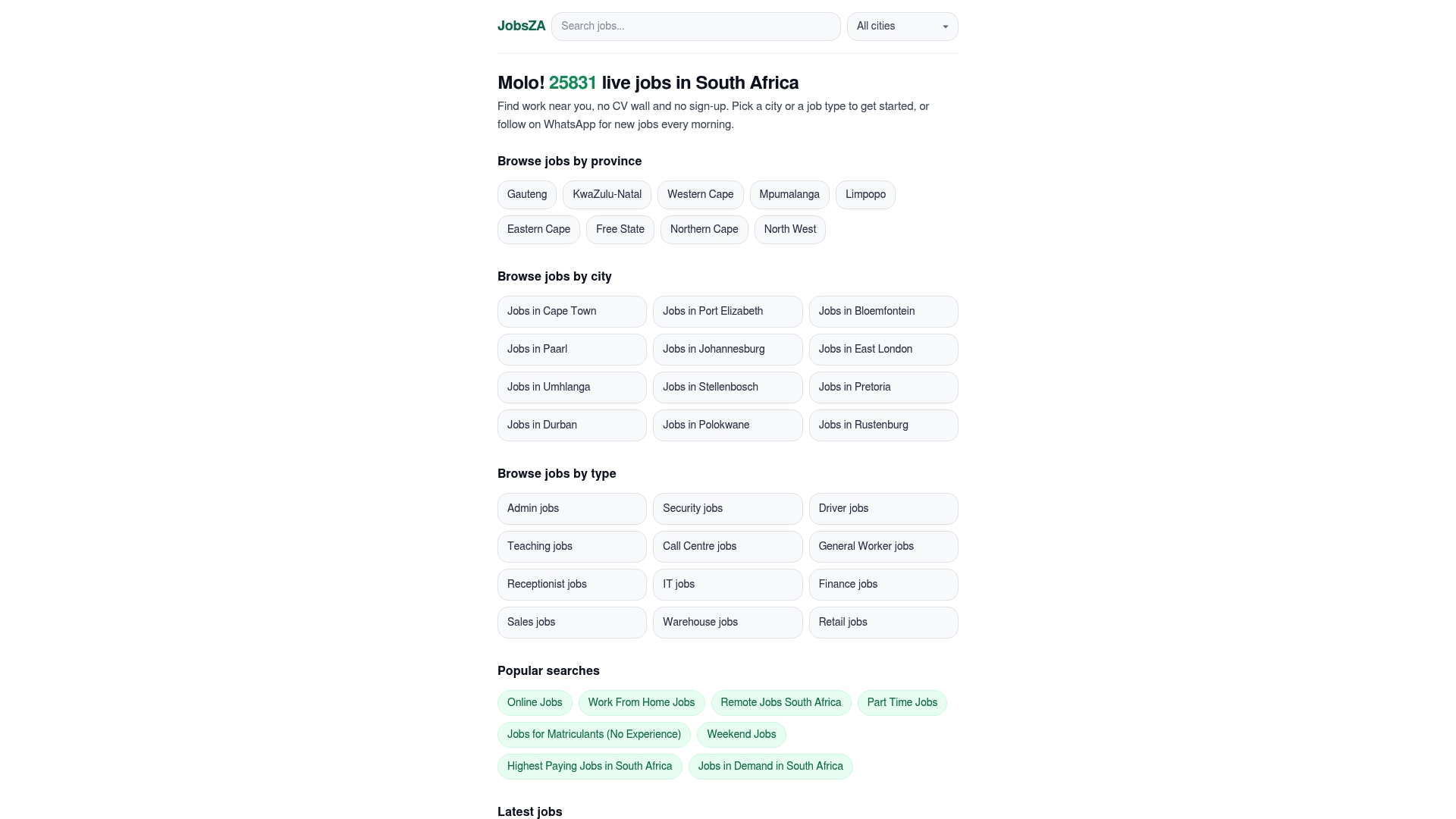
Browse by city or category, save the WhatsApp number, and your first alert arrives tomorrow morning. To start, visit Findjobsza and add the WhatsApp number to your contacts now. Findjobsza does not share your number with third parties, and you can opt out of alerts at any time by sending “STOP.”
Sources
These are the primary portals and data sources referenced in this article:
- South Africa’s Youth and the Labour Market in Q1 2026 | Statistics South Africa
- The world is desperate for workers. Why is South Africa still battling unemployment? | IOL
- Finding a job: tips on how to find a good job (Department of Labour booklet)
- How to Get Your First Graduate Job in South Africa (2026) | Graduates Hub
- NYDA quarterly youth economic bulletin (March 2026) | NYDA
FAQ
How do I set up job alerts for entry-level roles in South Africa?
Subscribe to Findjobsza’s free WhatsApp alert channel at findjobsza.co.za, register on ESSA via labour.gov.za, and create a LinkedIn job alert filtered to “Entry level” and South Africa. Use keywords like “learnership,” “matric,” and “0–2 years” to catch the most relevant posts.
Why is it hard for young South Africans to get hired?
Stats SA Q1 2026 data shows a NEET rate of 45.6% among 15–34 year-olds and an absorption rate of just 10.1% for the 15–24 group, reflecting a structural mismatch between a large youth population and limited job creation rather than a lack of effort from job seekers.
What is the easiest entry-level job to get in South Africa?
Retail, BPO (call centre), hospitality, and security roles typically have the lowest experience barriers and the highest intake volumes. Learnerships in these sectors are also widely available and often lead to permanent employment.
How do I get alerts for job postings without creating multiple accounts?
Use Findjobsza’s WhatsApp alert for daily delivery without any account, set one LinkedIn alert with strong keyword filters, and add a Google Alert for target employer career pages. Three well-configured alerts cover most of the market without notification overload.
How long does it realistically take to find a first job in South Africa?
Graduates Hub’s guidance suggests a few months is generally a realistic expectation for a well-prepared graduate using tailored applications. Responding to alerts quickly and targeting learnerships alongside open adverts can shorten that window.
Recommended
Start with your city.
19 529 live jobs, filtered by city and suburb. No sign-up wall, no CV upload just to look.