Graduate recruitment in South Africa: guide for 2026
11 August 20267 min read

Contents8 sections
Graduate recruitment in South Africa: guide for 2026
Start your search on employer career pages, SAGEA-affiliated boards, and graduate job listings on Findjobsza, then set daily alerts before you do anything else. Graduate recruitment in South Africa is more competitive than most students expect. SAGEA’s 2025 benchmarking data shows a median of 35 vacancies per programme and 116 applications for every single vacancy. Those numbers mean your first application is rarely your best one, so starting early and applying strategically matters more than volume.
Your first 48 hours should look like this:
- Clean your LinkedIn profile and add impact-focused bullet points to every role or project.
- Pick five target programmes that match your degree and career goals.
- Set graduate job alerts on Findjobsza and on each employer’s careers page.
- Draft one tailored CV template you can adapt per application, not a generic document.
- Check SAGEA resources for psychometric prep guides before your first online assessment.
Pro Tip: Recruiters cross-check LinkedIn before interviews. An incomplete profile or a vague headline signals low intent. Write your headline as a value statement, not a job title, and quantify at least two achievements in your experience section.
According to SAGEA’s candidate research, graduates who start their job search in their first year of study are significantly more likely to land their preferred role. The average candidate submits nine applications, which means spreading those nine across well-matched programmes beats scattering them widely.
Key takeaways
| Point | Details |
|---|---|
| Competition is high | SAGEA reports 116 applications per vacancy and a median of 35 positions per programme in 2025. |
| Start early | Candidates who begin searching in year one are more likely to secure their preferred role. |
| Employers want job-ready skills | Technical literacy plus soft skills (communication, resilience) matter more than grades alone. |
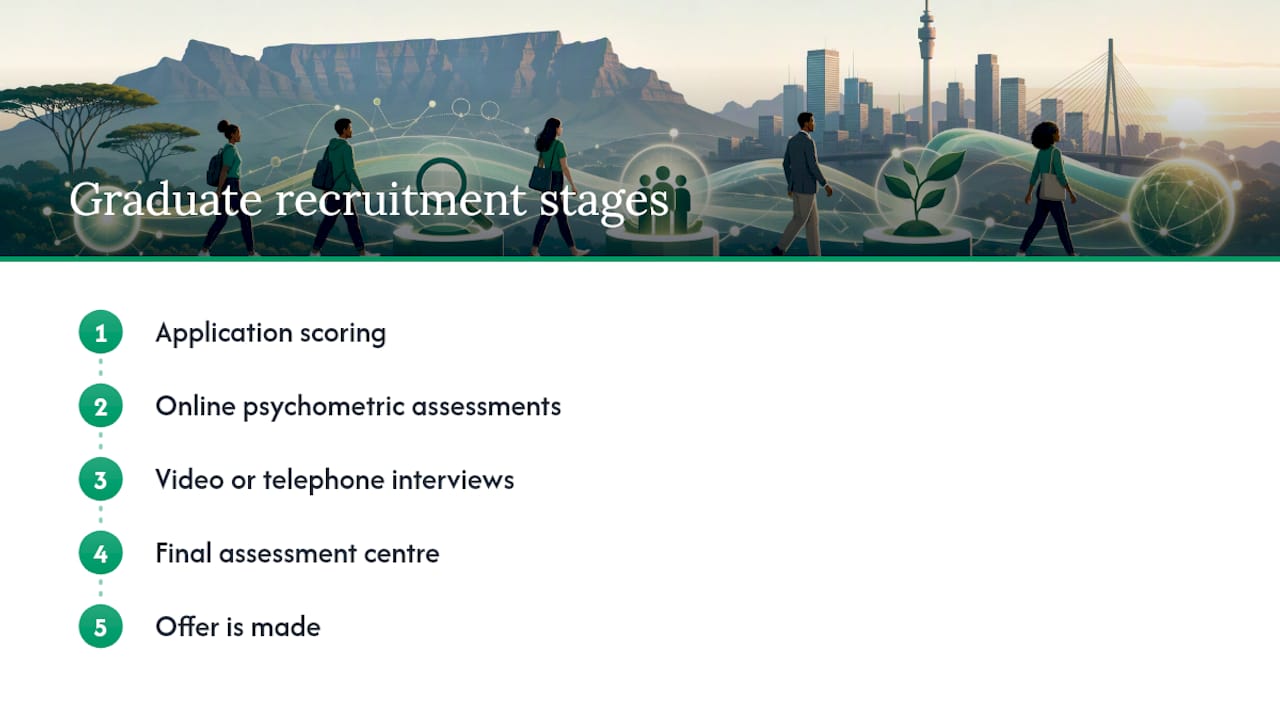
| Multi-stage selection is standard | Expect application scoring, psychometrics, interviews, and an assessment centre before an offer. |
| Findjobsza for daily alerts | Browse by city or category and receive daily WhatsApp alerts with no sign-up required. |
Table of Contents
- How networking in South Africa can get you hired faster
- What most graduates get wrong about the process
- Findjobsza makes the search faster and simpler
- Sources
- FAQ
How networking in South Africa can get you hired faster
Most graduates treat networking as optional. It is not. South Africa’s graduate market runs heavily on referrals, career fairs, and alumni visibility, and the candidates who show up in person or online before applications open have a measurable advantage.
University careers offices run annual graduate job fairs in Johannesburg, Cape Town, Pretoria, and Durban where top employers like EY and RMB send recruiters specifically to meet students. Attend these with a printed CV and a prepared 60-second introduction. Recruiters remember faces.
Professional associations, particularly in finance, engineering, and accounting, hold student chapters and events. Joining SAICA, SAIPA, or the South African Institute of Electrical Engineers as a student member puts you in the same room as hiring managers before you graduate.
On LinkedIn, follow the graduate recruitment teams at your target employers and comment meaningfully on their posts. It is a small signal, but recruiters notice consistent engagement from candidates whose applications later land in their inbox.
Alumni networks are underused. Most South African universities have active alumni LinkedIn groups. A direct, specific message to a recent graduate in your target programme, asking one focused question about their experience, converts far better than a generic connection request.
What most graduates get wrong about the process
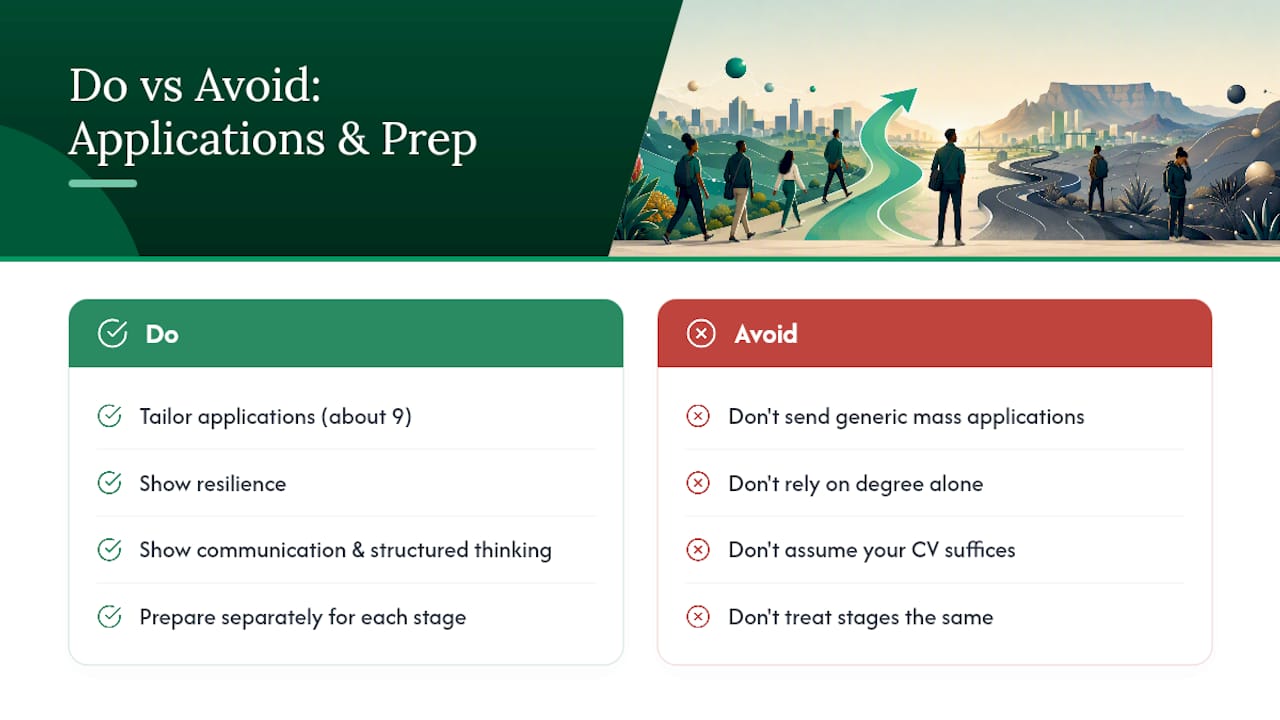
The conventional advice, “apply to as many programmes as possible,” sounds logical given the competition. It is usually counterproductive. SAGEA’s candidate data shows the average applicant sends nine applications. Nine is not a lot, but nine tailored, well-researched applications consistently outperform thirty generic ones.
The bigger gap is not academic. Employers consistently report that the shortage is in workplace-ready competencies, not degrees. They hire for potential and train technical skills in-house. That means a candidate who can demonstrate resilience, clear communication, and structured thinking in an interview will often beat a higher-scoring candidate who cannot.
The other thing graduates underestimate is the multi-stage process itself. Preparing for an online psychometric assessment is a skill. Preparing for an assessment centre is a different skill. Treating each stage as its own preparation task, rather than assuming a good CV carries you through, is what separates the shortlisted from the hired.
Findjobsza makes the search faster and simpler
Searching for graduate jobs across multiple employer sites, university boards, and career portals is time-consuming. Findjobsza cuts that friction: browse entry-level and graduate roles by city, province, or category, and get new listings delivered to your WhatsApp every morning. No CV upload. No account creation. No barrier between you and the next application.
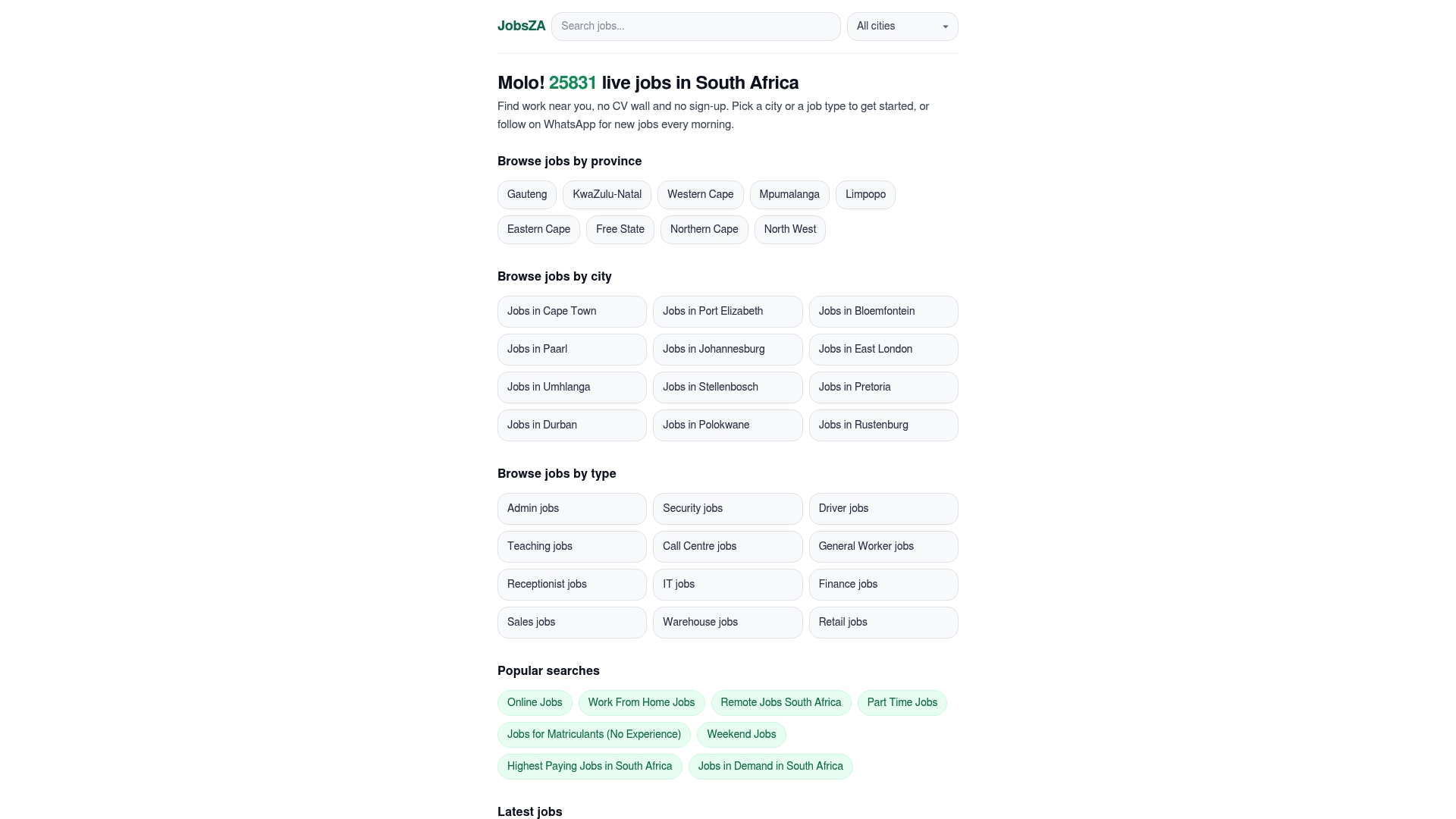
Whether you are targeting finance roles in Johannesburg or entry-level positions in Cape Town, Findjobsza surfaces relevant vacancies the moment they are posted. Start your search at Findjobsza and activate WhatsApp alerts today.
Sources
Trust these sources and check them regularly:
- The SAGEA Employer Benchmark and Candidate Insights 2025 |
- RMB - Graduate Programme
- Apply for Student Programs | EY - South Africa
Key SAGEA benchmarks for 2025:
Set a calendar reminder to check SAGEA’s annual release each year, subscribe to employer mailing lists directly from their careers pages, and activate Findjobsza’s WhatsApp alerts so new listings reach you every morning before you open a job board.
FAQ
How many applications should I send for graduate programmes?
SAGEA research shows the average candidate submits nine applications. Quality and fit matter more than volume, so target programmes that match your degree and skills.
What is the typical graduate starting salary in South Africa?
The SAGEA 2025 benchmark reports a median graduate starting salary of R260,000 per year.
What stages does a graduate recruitment process usually include?
Most competitive programmes follow application scoring, online psychometric assessments, video or telephone interviews, and a final assessment centre before an offer is made.
Where can I find graduate jobs in South Africa without signing up?
Findjobsza lets you browse graduate and entry-level vacancies by city or category and receive daily WhatsApp alerts with no registration or CV upload required.
When should I start applying for graduate programmes?
As early as possible, ideally in your first or second year of study. SAGEA data shows early starters are more likely to secure their preferred role, and many top programmes open applications six to twelve months before intake.
Recommended
Start with your city.
19 529 live jobs, filtered by city and suburb. No sign-up wall, no CV upload just to look.