Internship alerts every South African student should set up now
23 August 202611 min read

Contents12 sections
- 1Key Takeaways
- 2Table of Contents
- 3Where to find verified internship alerts in South Africa
- 4How do I set up alerts that actually notify me in time?
- 5What documents do you need to apply without getting rejected?
- 6How do you increase your chances beyond just applying?
- 7When is the best time to apply for internships in South Africa?
- 8What the conventional advice on internships gets wrong
- 9Get daily internship alerts from Findjobsza without the CV hassle
- 10Sources
- 11FAQ
- 12Recommended
Internship alerts every South African student should set up now
Subscribe to the DPSA vacancy circular and add a trusted local WhatsApp feed like Findjobsza. That combination catches most legitimate South African internship openings the moment they go live.
Here’s why this pairing works: the DPSA circular is where every public-sector internship and learnership gets published first, direct from government. Findjobsza fills the gap around it, aggregating local market listings and pushing them to your phone every morning without you refreshing ten browser tabs. Between the two, you cover both the official public-sector pipeline and the daily churn of private-sector openings.
Do this before you read further:
- Bookmark the DPSA circular page and check it every Friday, when new listings drop.
- Sign up for a local WhatsApp job alert service so private-sector internships reach you the same morning they’re posted.
One minute of setup now saves you from missing a two-week application window later.
Key Takeaways
Reliable internship alerts combine one official government source, sector-specific mailing lists, and a fast local aggregator, backed by a documents checklist prepared in advance.
| Point | Details |
|---|---|
| Start with DPSA | Bookmark the DPSA vacancy circular and check it weekly for public-sector internships. |
| Layer multiple channels | Combine Google Alerts, university notifications, and SETA mailing lists so no opening slips past you. |
| Prepare documents early | Keep your CV, certified ID, transcript, and qualification certificate ready before any advert appears. |
| Never pay to apply | Legitimate internships are free; any fee request is a scam signal worth reporting. |
| Use Findjobsza for daily coverage | Findjobsza delivers morning WhatsApp alerts and city or category browsing with no CV upload required. |
Table of Contents
- Where to find verified internship alerts in South Africa
- How do I set up alerts that actually notify me in time?
- What documents do you need to apply without getting rejected?
- How do you increase your chances beyond just applying?
- When is the best time to apply for internships in South Africa?
- What the conventional advice on internships gets wrong
- Get daily internship alerts from Findjobsza without the CV hassle
- Sources
- FAQ
Where to find verified internship alerts in South Africa
Not every source of internship news deserves your trust, and mixing them up wastes time you don’t have. Start with government channels, then layer on sector-specific and aggregator sources.
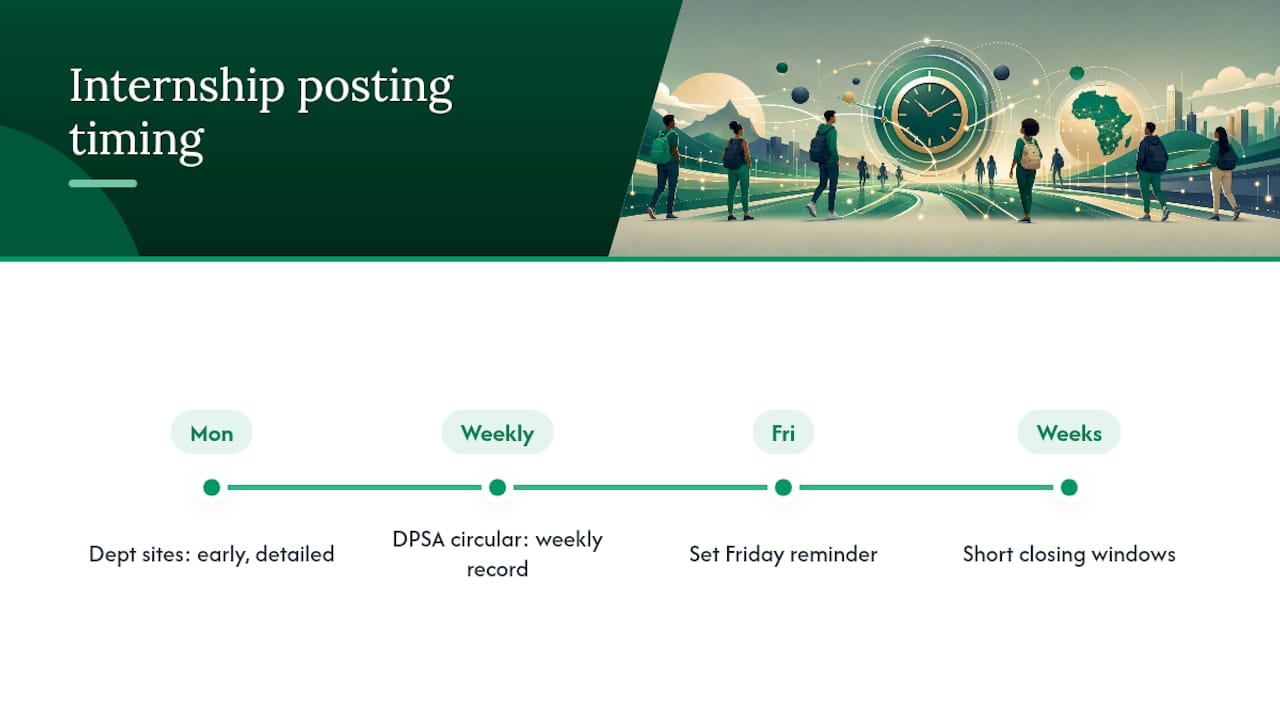
Government and official portals. The DPSA vacancy circular publishes weekly and is the definitive record of public-sector internships and learnerships across national and provincial departments. Departmental websites often carry the same listings a few days earlier or with more detail, so it’s worth bookmarking two or three departments relevant to your field directly.
Sector and education-specific hubs. SETA websites list learnerships tied to specific industries, from insurance to manufacturing. The NYDA runs youth-focused opportunities, university career portals post roles vetted for students on that campus, and TVET college hubs carry openings matched to vocational qualifications. These sources are narrower than DPSA but often less competitive, since fewer people know to check them.
Aggregators and curated local feeds. Verified hubs that publish weekly listings with closing dates reduce the risk of missing short windows, since many internship postings across South Africa close within a few weeks of going live. Findjobsza fits this category: it delivers internship openings by WhatsApp every morning and lets you browse by city or job type without creating an account or uploading a CV.

Random social media posts and unsolicited “placement agency” messages are where things go wrong. They’re often incomplete, outdated, or outright scams dressed up as internship offers.
Pro Tip: Set a recurring Friday reminder to check the DPSA circular. New provincial and national postings tend to land at the start of the week and get buried in departmental inboxes by month end.
How do I set up alerts that actually notify me in time?
Missing a closing date because you checked a site three days too late is the single most avoidable mistake in this process. Layer these channels so nothing slips through:
- Subscribe to DPSA updates and bookmark relevant departmental pages. Check weekly, and note that public-sector adverts often close faster than private-sector ones.
- Build Google Alerts with South Africa filters. Use search strings like “internship marketing South Africa” or “graduate internship Gauteng” so alerts arrive in your inbox as new pages get indexed.
- Sign up for a WhatsApp alert service. Findjobsza’s daily morning feed works because it lands where students already look first thing, rather than sitting unread in an email folder.
- Activate university career centre notifications and SETA mailing lists if you’re still enrolled or recently graduated, since these often carry openings not advertised publicly.
- Consolidate everything into one tracker. A shared calendar or spreadsheet with closing dates stops you from juggling five separate alert sources in your head.
Pro Tip: Add closing dates to your phone calendar the moment you spot an advert, not the day before it closes. A tool built for tracking job applications can help you manage this once alerts start arriving from multiple channels at once.
What documents do you need to apply without getting rejected?
Most rejections have nothing to do with qualifications. They come down to missing paperwork or sloppy submission habits that a recruiter skims past in seconds.
Have these ready before you apply anywhere:
- Updated CV, tailored to the specific internship rather than a generic template.
- Certified copy of your ID (check the advert for how recent the certification needs to be).
- Matric certificate and proof of your highest qualification.
- Full academic transcript, not just a results summary.
- Proof of residence, if the advert specifically requests it.
A successful application is complete, accurate, and submitted before the deadline, and adverts spell out exactly what’s required, including minimum qualifications and closing dates. Read that fine print twice. When applying by email, use a clear subject line with the reference number if one is given, name your files sensibly (not “CV final final 2.pdf”), and upload in the format requested, usually PDF.
Submit early. Portals and email systems have a habit of failing in the final hour before a deadline, and a late submission because of a technical glitch still counts as late.
One more thing worth repeating: legitimate internships in South Africa are free to apply for. Any advert asking for a registration fee, banking details, or an “administration charge” upfront is a scam, full stop.
How do you increase your chances beyond just applying?
Alerts get you in front of opportunities. What happens next depends on how you present yourself and how far you’re willing to look beyond the obvious channels.
The hidden internship market matters more than most students realize. Reaching out directly to a mid-level manager on LinkedIn, asking a short question about the team or what skills they value, often surfaces openings that never get advertised publicly. This works better than applying blind because it’s a conversation, not a request.
If you don’t have formal work experience, lean into what you do have. Community engagement and volunteer work can directly improve how employers view your workplace readiness, especially when you describe concrete outcomes rather than vague involvement. SRC roles, class projects, and short online courses all count as evidence you can show up and deliver.
Your CV needs to survive a fast scan. Recruiters often spend only six to ten seconds on a first read, so frontload relevant skills, keep the format reverse-chronological, and cut anything that doesn’t relate to the role.
- Message mid-level managers with a specific, short question rather than a generic ask for a job.
- List volunteer work and student leadership with real numbers: hours, responsibilities, results.
- Apply early enough to fix technical issues before the deadline, and follow up politely after a week if you hear nothing.
Pro Tip: A clear, well-structured CV format makes the six-second scan work in your favor instead of against you, even when the guidance you’re borrowing from isn’t South African specific.
When is the best time to apply for internships in South Africa?
Timing shapes your odds as much as the application itself. Government internship cycles tend to cluster around two windows: applications for the following calendar year often open between August and November, while some departments run a mid-year intake announced through the DPSA circular closer to April or May.
Corporate graduate and internship programmes usually open recruitment several months ahead of the intended start date, frequently in the first quarter of the year for a mid-year or January start. Waiting until a programme is close to starting means you’re applying into an already-shrinking pool of open positions.
New internships get posted every week across government, corporate, and education sectors, and many close within two to three weeks of going live. That short window is exactly why relying on a single alert channel, checked occasionally, isn’t enough. Set your alerts up months before you actually need a placement, not the week you realize you need one.
The safest strategy is to treat internship hunting as a year-round habit rather than a seasonal scramble. Check your alert channels weekly regardless of whether you’re actively applying, so when the right opening appears, you’re not starting from zero.
What the conventional advice on internships gets wrong
Most guides treat internship hunting like a single event: polish your CV, submit it somewhere, wait. That advice undersells how much of this game is about infrastructure, not effort at the moment of application.
The students who land internships aren’t necessarily the most qualified. They’re the ones whose alert systems catch an opening on day one instead of day twelve, when a role has already had two hundred applications. Setting up DPSA monitoring, a WhatsApp feed, and a couple of Google Alerts takes fifteen minutes, and it does more for your odds than another CV revision.
The other blind spot is the hidden market. Everyone applies to what’s advertised. Almost nobody messages a manager directly to ask a genuine question about the team. That asymmetry is exactly why it works, and why I’d tell any graduate to spend as much time on outreach as on refreshing job boards.
Prioritize the boring infrastructure first: reliable alerts, a document checklist you never have to think about twice, and one direct message a week to someone in your target field. Everything else is refinement.
Get daily internship alerts from Findjobsza without the CV hassle
Findjobsza is built for exactly the scramble described above: no CV upload, no account creation, just internship and job listings you can browse by city or category the moment they’re posted.
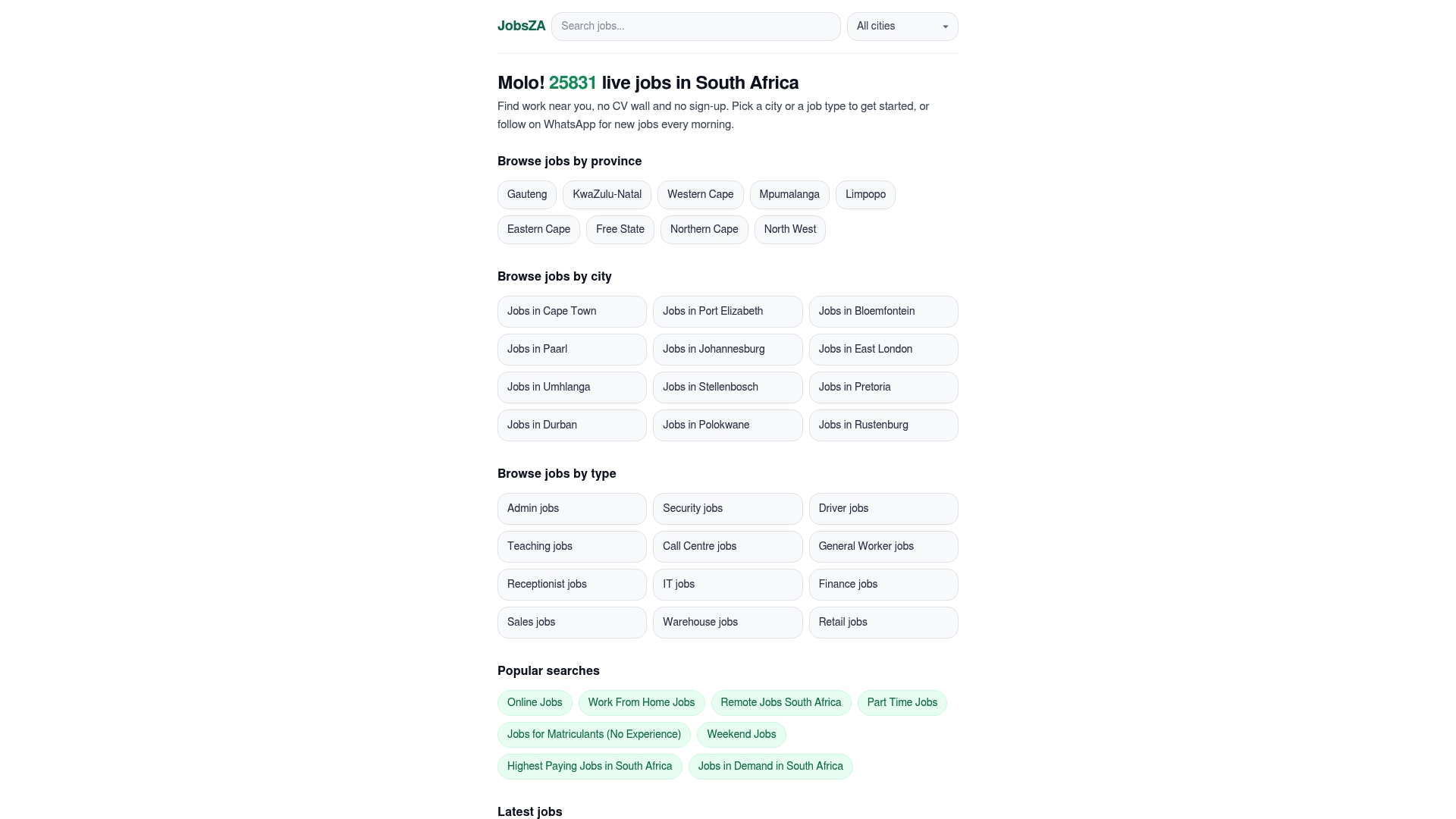
Once you’re monitoring DPSA and a couple of SETA mailing lists, add Findjobsza’s daily WhatsApp feed to round out your coverage of private-sector and entry-level openings that never make it onto government portals. Start with the jobs in demand page to see which sectors are hiring most actively right now, then check remote roles or admin positions if you’re casting a wide net for entry-level experience.
Setup takes under five minutes: open the site, pick your city or category, and join the WhatsApp feed for morning updates. There’s no sign-up form standing between you and a listing, which also means less exposure to the fake “registration required” scams that circulate on social media. Head to Findjobsza and get today’s listings before you finish reading your next lecture notes.
Sources
- Department of Employment and Labour warning about learnership scams
- How to apply for learnerships and internships in South Africa (MySETA)
- Community engagement directly impacts employability (University of Pretoria career services)
FAQ
What is the fastest way to get internship alerts in South Africa?
Subscribe to the DPSA vacancy circular for public-sector roles and sign up for a WhatsApp alert service like Findjobsza for daily private-sector listings.
How often does the DPSA publish new internship vacancies?
The DPSA vacancy circular is published weekly, making it the most reliable single source for public-sector internship and learnership openings.
Do I have to pay to apply for an internship in South Africa?
No. Legitimate internships are free to apply for, and any request for payment or banking details upfront is a scam.
When should I start applying for internships?
Government cycles often open applications between August and November for the following year, while corporate programmes typically recruit in the first quarter for mid-year or January starts. Apply as early as each cycle opens rather than waiting for the closing date to approach.
Can Findjobsza help me find internships without submitting a CV upfront?
Yes. Findjobsza lets you browse internship and job listings by city or category with no CV upload or account sign-up, and it sends daily alerts by WhatsApp.
Recommended
Start with your city.
20 114 live jobs, filtered by city and suburb. No sign-up wall, no CV upload just to look.