Scarce skills in South Africa: what jobseekers should do next
31 July 202618 min read

Contents14 sections
- 1Table of Contents
- 2What do “scarce skills” actually mean in South Africa?
- 3Where to verify scarce skills: official South African sources
- 4Which sectors have the most scarce occupations right now?
- 5Why targeting a scarce-skills path changes your career prospects
- 6How to enter scarce-skills occupations: training routes and timelines
- 7How to find scarce-skills jobs in South Africa right now
- 8What employers actually look for when hiring scarce-skills candidates
- 9Key takeaways
- 10A perspective on navigating scarce skills in South Africa
- 11Findjobsza connects you to scarce-skills vacancies without the friction
- 12Useful sources and where to read them
- 13FAQ
- 14Recommended
Scarce skills in South Africa: what jobseekers should do next
South Africa officially defines scarce skills as occupations where employers struggle to recruit or retain suitably qualified and experienced people. The single most useful thing you can do right now is check the 2024 National List of Occupations in High Demand (N-OIHD) published by the Department of Higher Education and Training (DHET), then contact the relevant Sector Education and Training Authority (SETA) for your target field and ask about funded learnerships or work-integrated learning (WIL) placements.
Quick actions to take today:
- Download the DHET 2024 N-OIHD gazette from Gov.za and check whether your target occupation appears.
- Identify your sector’s SETA (e.g., MERSETA for engineering, HWSETA for health) and ask about current learnership openings.
- If you are still in training, prioritise programmes that include a WIL component or an employer compact — these convert directly into job offers far more reliably than classroom-only qualifications.
Pro Tip: The N-OIHD is updated every two years; the next revision is planned for 2026. Always check the gazette date on any list you find online before making a career or study decision based on it.
Table of Contents
- What do “scarce skills” actually mean in South Africa?
- Where to verify scarce skills: official South African sources
- Which sectors have the most scarce occupations right now?
- Why targeting a scarce-skills path changes your career prospects
- How to enter scarce-skills occupations: training routes and timelines
- How to find scarce-skills jobs in South Africa right now
- What employers actually look for when hiring scarce-skills candidates
- Key takeaways
- A perspective on navigating scarce skills in South Africa
- Findjobsza connects you to scarce-skills vacancies without the friction
- Useful sources and where to read them
- FAQ
What do “scarce skills” actually mean in South Africa?
The South African government draws a clear line between two related but distinct concepts, and confusing them leads to poor career decisions.
Scarce skills refer to specific occupations where qualified, experienced people are either unavailable or available but unable to meet employer requirements. The official definition covers two types of scarcity:
- Absolute scarcity: The occupation is new or emerging, and almost no one in the country holds the required qualification and experience. Education providers have not yet developed programmes to meet the need.
- Relative scarcity: Qualified people exist but do not meet employment criteria — perhaps because of geographic mismatch, lack of practical experience, or failure to meet professional registration requirements.
Critical skills, by contrast, refer to capabilities rather than job titles. Think management competence, digital literacy, communication, or problem-solving. A person can be employed in a non-scarce occupation and still lack critical skills. The distinction matters because government incentives, visa categories, and SETA funding are allocated differently depending on which category applies.
For career planning, the practical takeaway is this: if your target occupation appears on an official scarce-skills or OIHD list, you are entering a field where employers are actively competing for candidates. That changes your negotiating position, your likely time-to-hire, and in the public sector, your potential allowance entitlements.
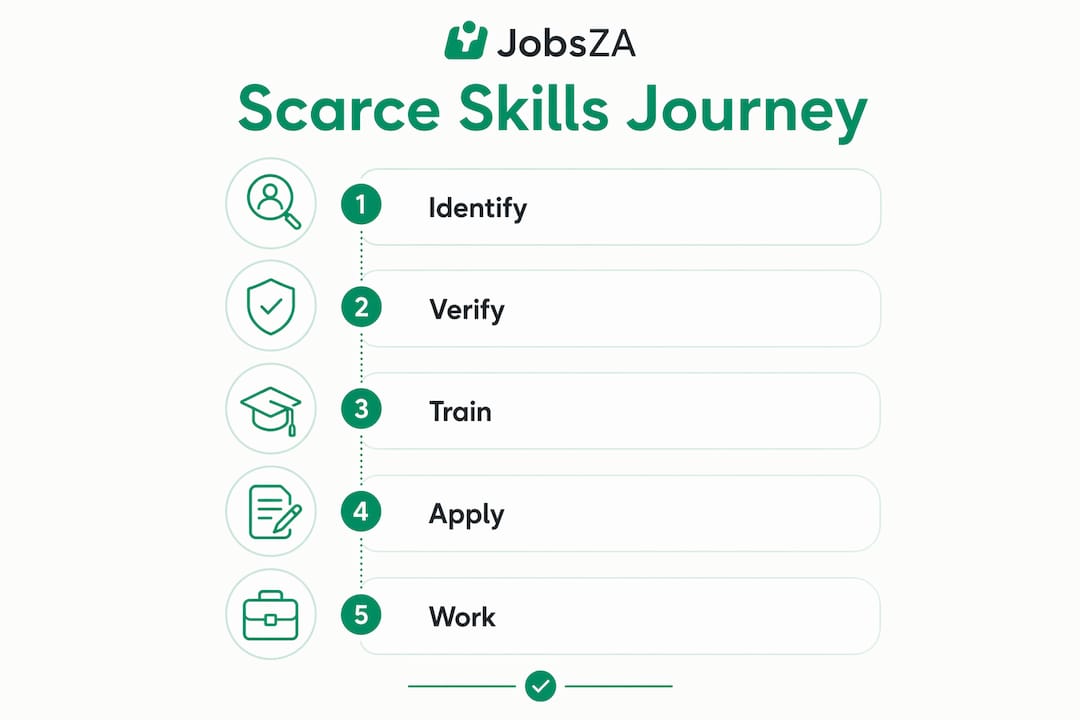
Where to verify scarce skills: official South African sources
Knowing which lists exist is only half the job. Knowing what each one actually measures, and what it does not, keeps you from making expensive mistakes.
The DHET National List of Occupations in High Demand (N-OIHD)

The 2024 N-OIHD is the primary national planning tool. It comprises 350 occupations drawn from the Organising Framework for Occupations (OFO) and selected using a multidimensional methodology that combines vacancy data, wage trends, employment indicators, and consolidated job-advertisement databases. The final list represents the top 25% of occupations by demand score across those indicators.
One critical caution: DHET is explicit that the N-OIHD is a post-school education and training (PSET) planning tool, not a direct shortage list for immigration or recruitment decisions. Using it to argue a visa case or to guarantee a job offer is a misreading of its purpose.
Department of Labour and Employment Services
The Department of Labour’s scarce-skills publications and the Employment Services of South Africa (ESSA) platform feed into visa and permit decisions and inform public employment services. These documents track which occupations are experiencing active recruitment difficulty, and they are updated more responsively to labour-market shifts than the biennial N-OIHD.
SETAs and sector skills plans
Each of South Africa’s 21 SETAs produces a Sector Skills Plan (SSP) that identifies scarce occupations within its specific industry. The MERSETA covers manufacturing and engineering; the HWSETA covers health and welfare; the ETDP SETA covers education, training, and development. SETA lists are employer-approved and labour-endorsed, making them highly credible for sector-specific career planning.
| Source | Best used for | Update frequency | Where to find it |
|---|---|---|---|
| DHET N-OIHD (Gov.za Gazette) | National career and study planning | Every 2 years (next: 2026) | Gov.za — search “50510gen2414” |
| Dept of Labour scarce-skills publications | Visa/permit and employment-services decisions | Periodic | labour.gov.za DocumentCenter |
| SETA Sector Skills Plans | Sector-specific training and learnership planning | Annual | Individual SETA websites |
| ESSA (Employment Services SA) | Job matching and vacancy tracking | Ongoing | essa.dol.gov.za |
| DPSA scarce-skills framework | Public-service allowance eligibility | Reviewed per PSCBC agreements | dpsa.gov.za |
Pro Tip: When you find a scarce-skills list online, always check the gazette number and publication date before acting on it. Lists from 2014 or 2016 still circulate widely and may not reflect current demand.
Which sectors have the most scarce occupations right now?
The following breakdown draws on the 2024 N-OIHD, the 2014 National Scarce Skills List, and current industry reporting. Where an occupation appears on the national OIHD, that is noted. Locally scarce roles (concentrated in specific provinces or municipalities) are flagged separately.

Information Technology The most consistently high-demand sector across every official list since 2014. Key occupations include Software Developers, ICT Systems Analysts, Computer Network and Systems Engineers, Computer Network Technicians, and ICT Project Managers. Cybersecurity specialists and data scientists appear in current industry reporting as acute gaps not yet fully captured in OFO-aligned lists. IT roles in Gauteng and the Western Cape attract the highest volumes of advertised vacancies.
Healthcare General Medical Practitioners, Public Health Physicians, Nursing Professionals, Registered Nurses (child and family health), Hospital and Retail Pharmacists, and Medical Superintendents all appear on the national list. Rural provinces face the sharpest absolute scarcity here; a qualified nurse or GP willing to work in Limpopo or the Eastern Cape has considerably more leverage than the same candidate in a metro.
Engineering and built environment Electrical, Civil, Mechanical, Chemical, Mining, Metallurgical, Electronics, and Environmental Engineers are all listed. So are their technologist equivalents and Physical and Engineering Science Technicians. Quantity Surveyors and Architects round out the built-environment cluster. Demand is concentrated in Gauteng, KwaZulu-Natal (port and industrial infrastructure), and the Northern Cape (mining).
Trades and artisans Electricians, Millwrights, Boilermakers, Fitters and Turners, Welders, Plumbers, Carpenters and Joiners, Diesel Mechanics, and Automotive Motor Mechanics all feature on the national list. Electrician and boilermaker vacancies are particularly active in mining and manufacturing hubs like the Witwatersrand, Mpumalanga, and the Free State.
Finance and accounting Accountants (General), Finance Managers, Actuaries, External Auditors, and Financial Investment Advisors are listed. The demand for qualified chartered accountants and management accountants consistently outpaces supply, particularly in the private sector.
Education Natural Science Teachers (Grades 10–12), Mathematics Teachers (primary and secondary), Foundational Phase School Teachers, and Vocational/Further Education Teachers are all on the national list. The shortage is acute in under-resourced provinces and in STEM subjects specifically.
Mining and technical Mining Engineers, Mining Engineering Technologists, Geologists, and Metallurgical Engineers are listed, with demand concentrated in the Northern Cape, North West, and Limpopo. Energy Engineers and Energy Engineering Technologists reflect the growing renewables and just-energy-transition pipeline.
Agriculture Agricultural Engineers, Agricultural Scientists, and Forestry Technicians appear on the list. These roles are often locally scarce rather than nationally acute, with the Western Cape (agri-processing), Mpumalanga (forestry), and KwaZulu-Natal (sugar and horticulture) showing the sharpest gaps.
Statistic to note: 51.7% of South African workers are employed in occupations that do not match their education level — 23% are over-qualified and 28.7% are under-qualified. This mismatch is why a qualification alone rarely guarantees employment in a scarce field; practical experience and WIL evidence matter as much as the certificate.
Why targeting a scarce-skills path changes your career prospects
Choosing a scarce occupation is not just about job security. It reshapes the entire employment relationship in your favour.
The concrete benefits:
- Faster hiring cycles. Employers competing for a thin candidate pool move quicker and negotiate less aggressively on salary.
- Higher wages. Scarcity creates upward wage pressure; the highest-paying roles in South Africa cluster heavily in engineering, healthcare, IT, and finance — all scarce-skills sectors.
- Geographic mobility. A scarce qualification is portable across provinces and, in some cases, across borders. South Africa’s Critical Skills Visa is specifically designed to attract foreign nationals in designated scarce categories, which signals how seriously the government treats these gaps.
- Public-sector allowances. The DPSA scarce-skills framework provides a non-pensionable allowance of 10% of basic salary for Degree 2 scarcity and 15% for Degree 3 — a meaningful supplement for government employees in designated occupations.
The trade-offs are real too. Training timelines for engineering or medicine run four to six years at university level. Competition for the premium roles within scarce fields is still fierce, even if the overall pool is thin. And demand shifts: an occupation that is acutely scarce today may be less so by the time a three-year qualification is complete if the education system responds quickly or if economic conditions change.
The education-job mismatch figure above is the most important caution here. Being qualified in a scarce field does not automatically translate into employment if your qualification lacks practical components or employer recognition.
How to enter scarce-skills occupations: training routes and timelines
South Africa’s post-school education system offers several distinct routes into scarce occupations, each with different time commitments, costs, and employment outcomes.
| Programme type | Typical duration | Cost signal | Employment outlook |
|---|---|---|---|
| University degree (NQF 7) | 3–4 years (engineering/medicine longer) | Tuition fees apply; NSFAS funding available for qualifying students | Strong for professional registration; best combined with WIL |
| TVET College diploma (NQF 4–6) | 1–3 years | Lower fees than university; some SETA-funded options | Good for trades and technical roles; employer recognition improving |
| Learnership (NQF 1–5) | 12 months | Usually employer-funded via SETA; stipend paid | High direct-to-employment conversion when linked to employer compact |
| Apprenticeship (trades) | 2–4 years | Employer-funded; regulated by QCTO | Leads to trade test and formal artisan status; strong demand |
| Short course / skills programme | Weeks to 6 months | Variable; some SETA-subsidised | Best as a supplement to a formal qualification, not a standalone |
The 2026 DHET budget of R149.2 billion prioritises TVET expansion, regional industrial skills compacts, and digital skills — specifically AI, software development, cybersecurity, and data. This signals sustained public funding for these pathways over the next several years.
Key points on each route:
- Learnerships and apprenticeships connected to employer compacts are the most reliable bridge from training to employment. DHET has instructed SETAs to strengthen these compacts precisely because classroom-only qualifications are not absorbing graduates fast enough.
- TVET colleges are the fastest route into trades. A National Certificate Vocational (NCV) or NATED programme at a public TVET college can lead to an artisan trade test within two to three years.
- WIL components are non-negotiable for healthcare, engineering, and education qualifications. Without clinical hours, practical training, or teaching practice, professional councils will not register you.
Pro Tip: When comparing programmes, ask the institution what percentage of graduates from the previous cohort were placed with employers within six months of completing WIL. That single figure tells you more than any marketing brochure.
How to find scarce-skills jobs in South Africa right now
Knowing your target occupation is step one. Getting in front of the right employers is where most candidates stall.
High-value channels to work simultaneously:
- SETA placement programmes: Contact your sector’s SETA directly and ask about current learnership and WIL placement opportunities. Many go unadvertised on public job boards.
- ESSA (Employment Services of South Africa): Register on the ESSA portal to access government-facilitated job matching, particularly for public-sector and state-owned enterprise roles.
- Professional council listings: Bodies like ECSA (engineering), HPCSA (health), and SAICA (accounting) maintain member directories and sometimes post vacancy notices.
- Employer career pages: Large employers in scarce-skills sectors — Eskom, Transnet, major mining houses, provincial health departments — run their own graduate and learnership programmes. Check their career pages directly, not just aggregator boards.
- Findjobsza: Browse jobs in demand across sectors, filter by city or job type, and set up WhatsApp alerts to receive new listings every morning. No CV upload or registration required.
Step-by-step checklist for applying to scarce-skills roles:
- Confirm your target occupation appears on the current N-OIHD or your sector’s SETA scarce-skills list.
- Verify your qualification is registered on the National Qualifications Framework (NQF) at the level the employer requires.
- Gather WIL evidence: logbooks, supervisor sign-offs, employer references from practical placements.
- Obtain professional registration or a trade test certificate where the occupation requires it (ECSA, HPCSA, QCTO).
- Tailor your CV to highlight practical experience, not just academic results. Employers in scarce fields are looking for proof you can do the job, not just that you passed the exam.
- Apply early to learnership and graduate programmes — most open in January and close by March.
Pro Tip: Employer compacts facilitated by SETAs often give learnership graduates first preference for permanent roles. If you are choosing between two similar programmes, pick the one where the employer is a named partner in the SETA compact.
What employers actually look for when hiring scarce-skills candidates
A scarce qualification gets you the interview. What happens next depends on how well you can demonstrate practical competence.
How employers validate scarce-skills candidates:
- Certified qualifications registered on the NQF and verified through the South African Qualifications Authority (SAQA).
- Professional registration with the relevant statutory body (ECSA for engineers, HPCSA for health professionals, SAICA or SAIPA for accountants).
- Portfolio or WIL evidence: logbooks, project records, clinical hours, or apprenticeship completion certificates.
- Practical assessments or trade tests, particularly for artisan occupations regulated by the Quality Council for Trades and Occupations (QCTO).
- References from WIL supervisors or employer-compact partners, which carry more weight than academic references.
Soft skills and proof points that move the needle:
Digital literacy is no longer optional in any scarce-skills sector. An engineer who cannot use project-management software or a nurse who cannot navigate electronic patient records is a harder hire than one who can. Teamwork evidence from WIL placements, problem-solving examples from practical assessments, and communication skills demonstrated in a portfolio or interview all matter.
Checklist: documents to prepare before applying:
- Certified copy of your qualification (SAQA-verified if applying to a formal employer).
- Professional registration certificate or proof of application.
- WIL logbook or employer reference letter from your practical placement.
- Trade test certificate (for artisan roles).
- Updated CV with specific projects, tools used, and measurable outcomes from practical experience.
Red flags employers consistently cite: gaps in WIL evidence, qualifications from unaccredited providers, and candidates who cannot explain what they actually did during their practical training.
Pro Tip: If your qualification is from a private provider, verify accreditation on the SAQA website before applying. An unaccredited qualification in a scarce field is worse than no qualification at all — it signals a red flag rather than a credential.
Key takeaways
South Africa’s scarce-skills landscape rewards candidates who combine a nationally recognised qualification with practical WIL experience and then apply through channels directly connected to employer demand.
| Point | Details |
|---|---|
| Verify with official sources | Check the DHET 2024 N-OIHD gazette and your sector’s SETA skills plan before committing to a training path. |
| Scarce ≠ guaranteed employment | 51.7% of workers are mismatched to their qualifications; WIL and employer compacts are what convert a scarce credential into a job. |
| Top sectors to target | IT, healthcare, engineering, trades, finance, education, and mining consistently appear across national and sector-specific lists. |
| Public-sector incentives exist | The DPSA framework pays a 10% non-pensionable allowance for Degree 2 and a 15% non-pensionable allowance for Degree 3 scarce-skills designations in government roles. |
| Use Findjobsza to act now | Browse jobs in demand by sector and city, with no CV upload or registration needed, and activate WhatsApp alerts for daily updates. |
A perspective on navigating scarce skills in South Africa
The conversation around scarce skills in South Africa tends to get stuck in two unhelpful places: either a vague list of “hot jobs” with no connection to how you actually get one, or a dense government document that most people never finish reading.
What the official data actually shows is more nuanced. The education-job mismatch — where more than half of employed South Africans are in roles that do not match their qualification level — is not primarily a story about lazy graduates or bad employers. It is a structural problem: training systems that produce qualifications without employer input, and employers who cannot find candidates with the right practical experience even when the theoretical supply looks adequate on paper.
The implication for anyone making a career decision right now is that the qualification is necessary but not sufficient. A three-year engineering diploma from a TVET college with a strong employer compact will, in most cases, produce better employment outcomes than a university degree completed without any WIL. That is not an argument against university. It is an argument for being ruthless about choosing programmes where employers are already in the room.
The other thing worth saying plainly: the 2026 DHET budget signals a sustained public commitment to digital and technical skills. Cybersecurity, software development, data, and AI are not just industry buzzwords in South Africa right now. They are the fields attracting the most public investment, the most employer interest, and the most SETA funding. If you are at the beginning of a career decision, that alignment between public money and employer demand is about as clear a signal as the labour market ever gives you.
Findjobsza connects you to scarce-skills vacancies without the friction
Knowing which occupations are in demand is only useful if you can act on it quickly. Findjobsza gives you direct access to in-demand roles across every major scarce-skills sector in South Africa, searchable by city, province, or job type, with no CV upload and no account registration required.
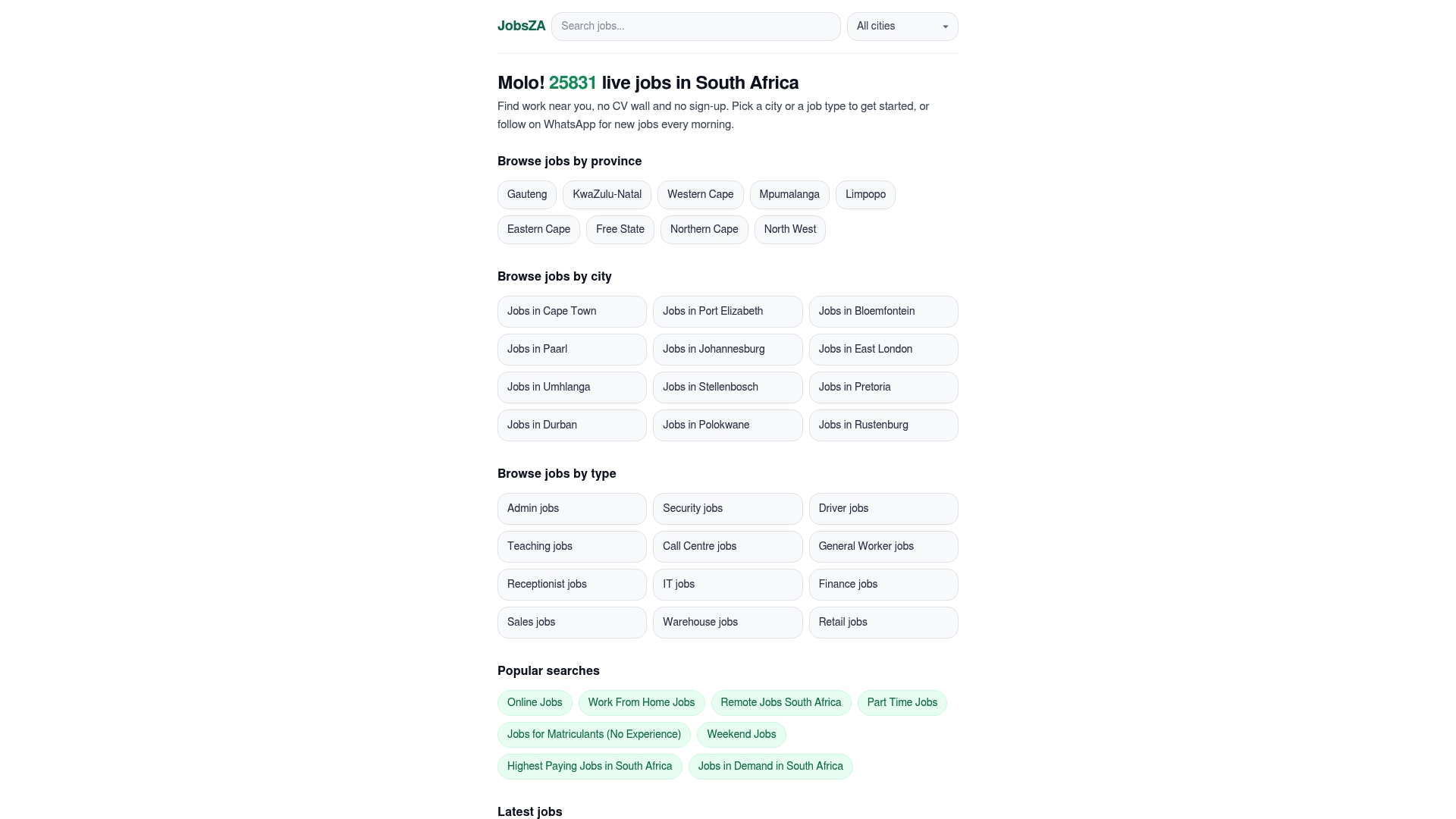
Browse IT vacancies, teaching roles, electrician openings, and more, or set up WhatsApp alerts to receive new listings every morning before the competition sees them. Whether you are a recent graduate looking for your first WIL-linked role or an experienced professional ready to move into a higher-demand position, the search takes seconds. Start browsing scarce-skills vacancies on Findjobsza now.
Useful sources and where to read them
The sources below are the authoritative documents for verifying scarce skills in South Africa. Each serves a different purpose.
| Source | Purpose | Where to find it |
|---|---|---|
| DHET 2024 N-OIHD Gazette (Gov.za) | National occupation planning; career and study guidance | gov.za — gazette notice 50510, April 2024 |
| DHET Technical Report (2024) | Methodology behind the N-OIHD; understanding what the list measures | dhet.gov.za — Planning, Monitoring and Evaluation section |
| Dept of Labour scarce-skills publications | Employment-services and visa/permit context | labour.gov.za — DocumentCenter, Public Employment Services |
| DPSA scarce-skills framework (Annexure I) | Public-sector allowance eligibility and scarcity degrees | dpsa.gov.za — Remuneration Policy documents |
| SETA Sector Skills Plans | Sector-specific scarce occupations; learnership and WIL opportunities | Individual SETA websites (e.g., merseta.org.za, hwseta.org.za) |
| ESSA portal | Job matching, vacancy tracking, and public employment services | essa.dol.gov.za |
| SAQA database | Qualification verification and NQF level confirmation | saqa.org.za |
Verification tip: Cross-reference at least two sources before making a training or career decision. An occupation that appears on both the N-OIHD and your sector’s SETA scarce-skills list is a stronger signal than one that appears on only one.
This article provides general information about South Africa’s scarce-skills framework. For decisions about visa applications, professional registration, or public-sector allowances, confirm current requirements directly with the relevant authority or a qualified professional.
FAQ
What are the top 10 scarce skills in South Africa?
The 2024 N-OIHD and the National Scarce Skills List consistently place Electrical Engineers, Civil Engineers, Mechanical Engineers, Software Developers, General Medical Practitioners, Nursing Professionals, Accountants, Mathematics Teachers, Electricians, and Boilermakers among the most in-demand occupations nationally.
What skill is most in demand in South Africa right now?
Engineering and IT occupations top every official list, with Software Developers, ICT Systems Analysts, and Electrical Engineers appearing across both the N-OIHD and SETA sector plans. Digital skills including cybersecurity and data analysis are flagged as acute gaps in current industry reporting.
What are scarce skills, and how do they differ from critical skills?
Scarce skills refer to specific occupations where qualified, experienced people are unavailable or unable to meet employer requirements. Critical skills refer to capabilities — such as digital literacy, management, or communication — that cut across many occupations rather than defining a single job title.
Does appearing on the scarce-skills list guarantee a job or visa?
No. The DHET N-OIHD is a post-school education planning tool, not a direct shortage list for immigration or recruitment. Visa decisions use a separate Critical Skills list published under the Immigration Act, and employment still depends on qualifications, professional registration, and practical experience.
How do I find scarce-skills vacancies in South Africa?
Check your sector’s SETA for learnership and WIL placements, register on the ESSA portal, and browse jobs in demand on Findjobsza by sector or city, with no sign-up required.
Recommended
Start with your city.
21 959 live jobs, filtered by city and suburb. No sign-up wall, no CV upload just to look.